
Every workplace carries stories of systems that looked promising but disappointed in practice. A chatbot that misunderstood customer concerns. A recruitment tool that missed strong candidates. A compliance check that flagged harmless cases but overlooked real risks. These failures rarely come from weak algorithms. They come from a lack of human guidance.
Most of the time, your employees see the gaps quickly. They know when answers sound flat, when judgment is missing, and when context is ignored. They know because they face these situations every day. Their knowledge cannot be replaced, but it can be transferred. When your employees guide AI, the technology learns to reflect real work. This process, known as reverse mentoring, is what turns AI from a rigid tool into a reliable partner.
The Core Idea of Reverse Mentoring
Your workplace is full of insights that never appear in official datasets. A customer service agent knows which tone softens an angry call. A recruiter recognizes subtle cues that suggest cultural fit. An operations lead remembers the exceptions that make or break a process.
AI does not arrive with this wisdom. If your employees do not supply it, the system repeats errors or applies rigid rules. Reverse mentoring solves this gap. It lets your employees guide AI through feedback, corrections, and context. Over time, the system becomes technically sound and also attuned to workplace reality.
This is not abstract. These are concrete actions taken by people in their daily roles. To show how, we can break the process into a structured loop.
How Your Employees Can Teach AI to Work Smarter
Training AI is a continuous cycle. The good news is that your employees do not need to be data scientists. They need to know how to observe, correct, and refine AI in structured ways. The process can be seen as a five-part mentoring loop.
Step 1. Observe With Attention
Start by having your employees notice how AI performs in their tasks. The point is not to passively accept results but to spot where the system aligns or misaligns with human judgment.
Actions your employees can take:
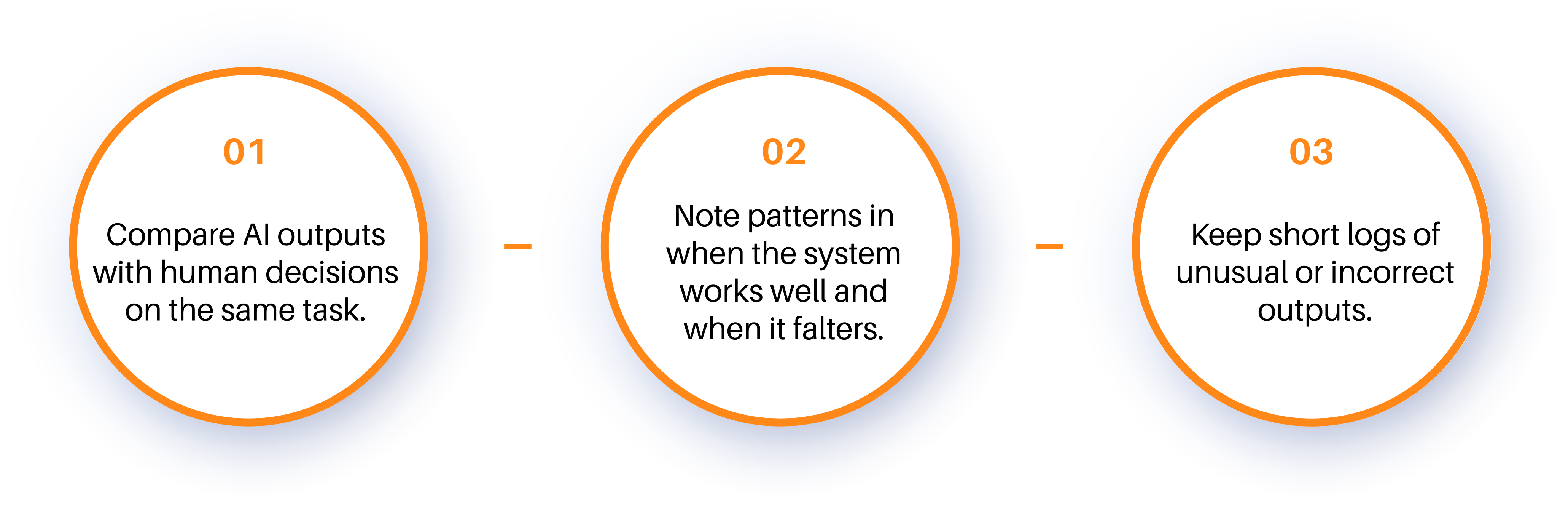
This step builds awareness. Your employees become the eyes and ears that detect what the system cannot see.
Step 2. Correct With Clarity
Observation turns into teaching when your employees correct the system. Corrections must be specific, not vague. A rewritten response, a flagged misclassification, or a clear explanation of why something is wrong gives AI signals it can learn from.
Examples:
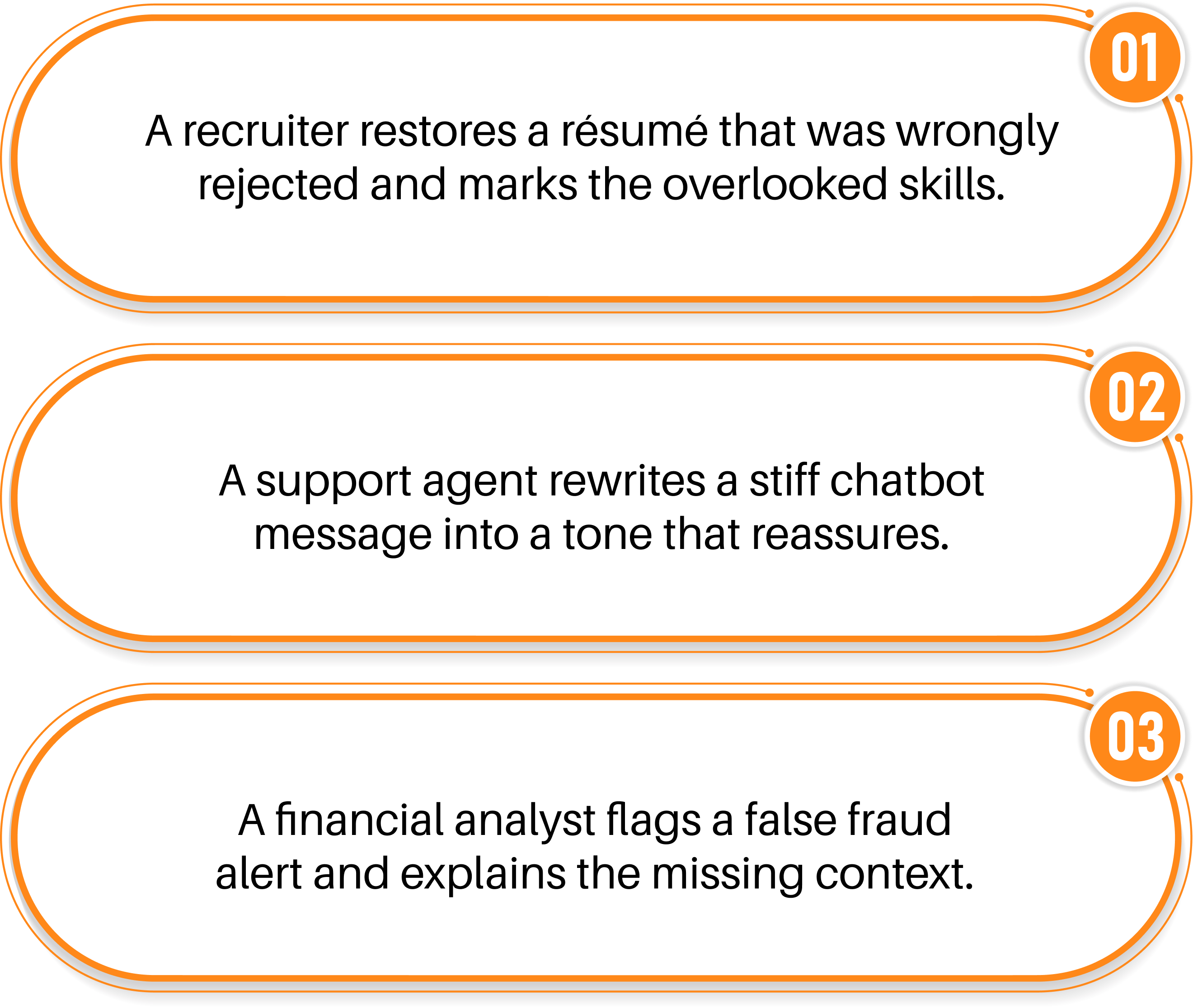
Clarity is crucial. Corrections that explain the “why” help the AI improve in the right direction.
Step 3. Provide Context the System Lacks
AI does not know your local policies, cultural practices, or unwritten rules unless someone tells it. Your employees supply this missing context so the system’s outputs reflect the real environment.
Practical ways your employees can do this:
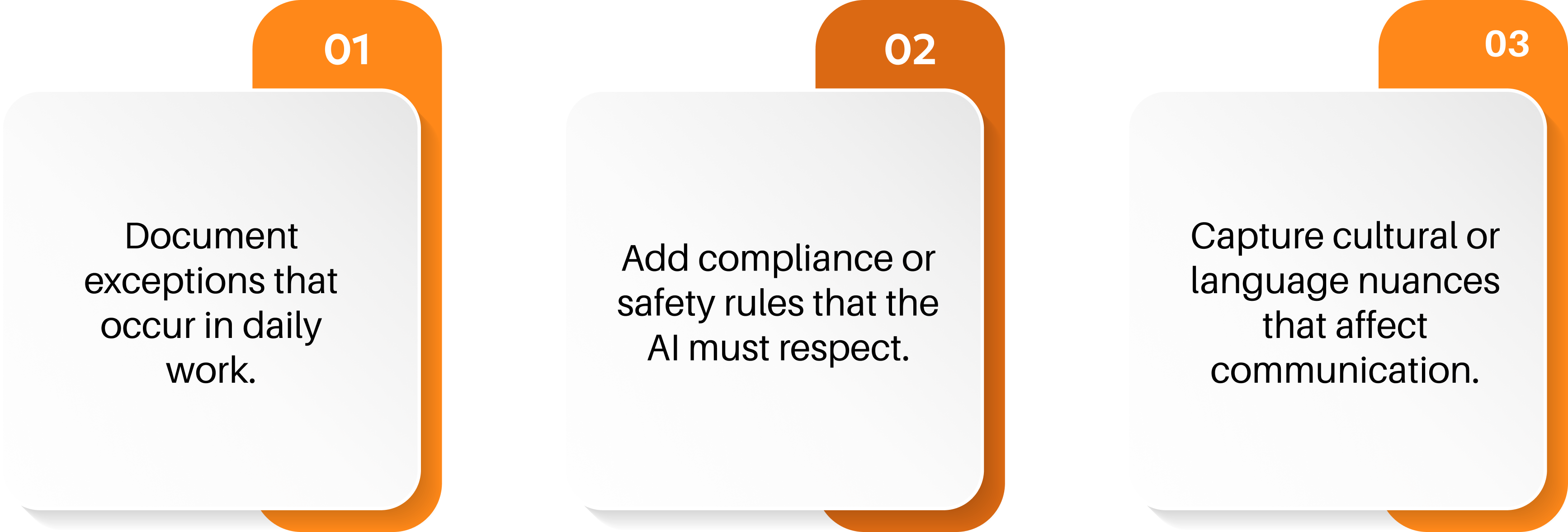
Context anchors AI in reality. Without it, even sophisticated systems make avoidable mistakes.
Step 4. Test and Challenge With Purpose
Encourage your employees to push the AI to handle complex or unusual cases. This exposes blind spots and ensures improvements are tested, not assumed.
Actions include:
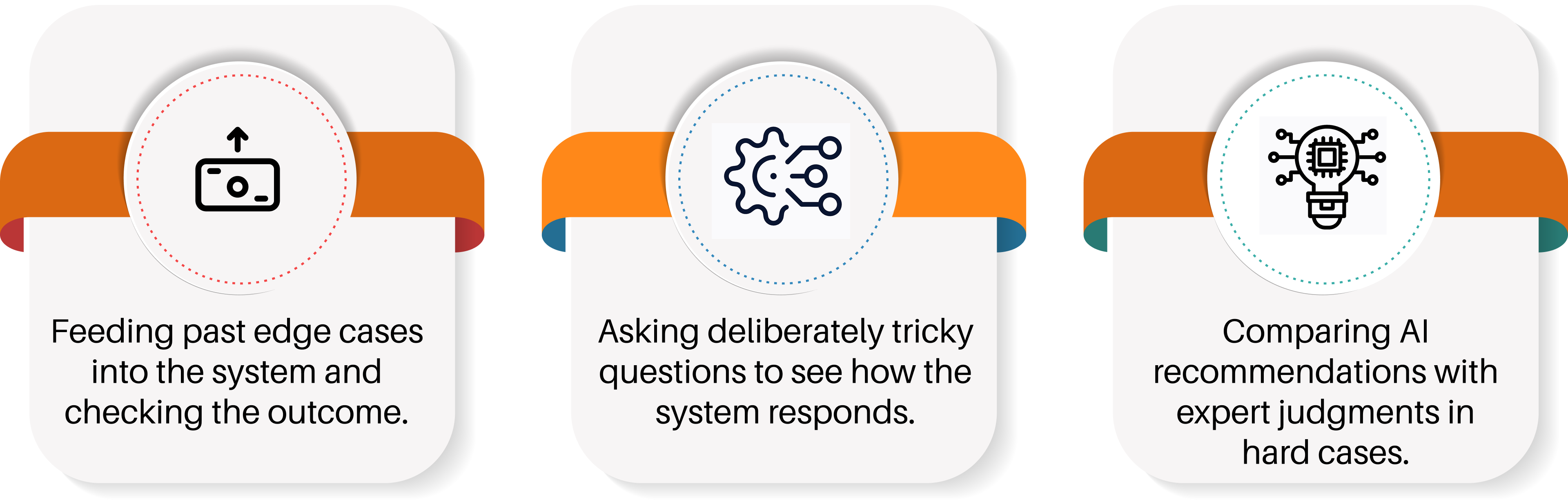
Testing is not about breaking the system for sport. It is about making sure that corrections and context are working as intended.
Finally, have your employees reflect on their mentoring. They should ask what has changed, what issues remain, and what colleagues can learn from their experience.
Ways to share:
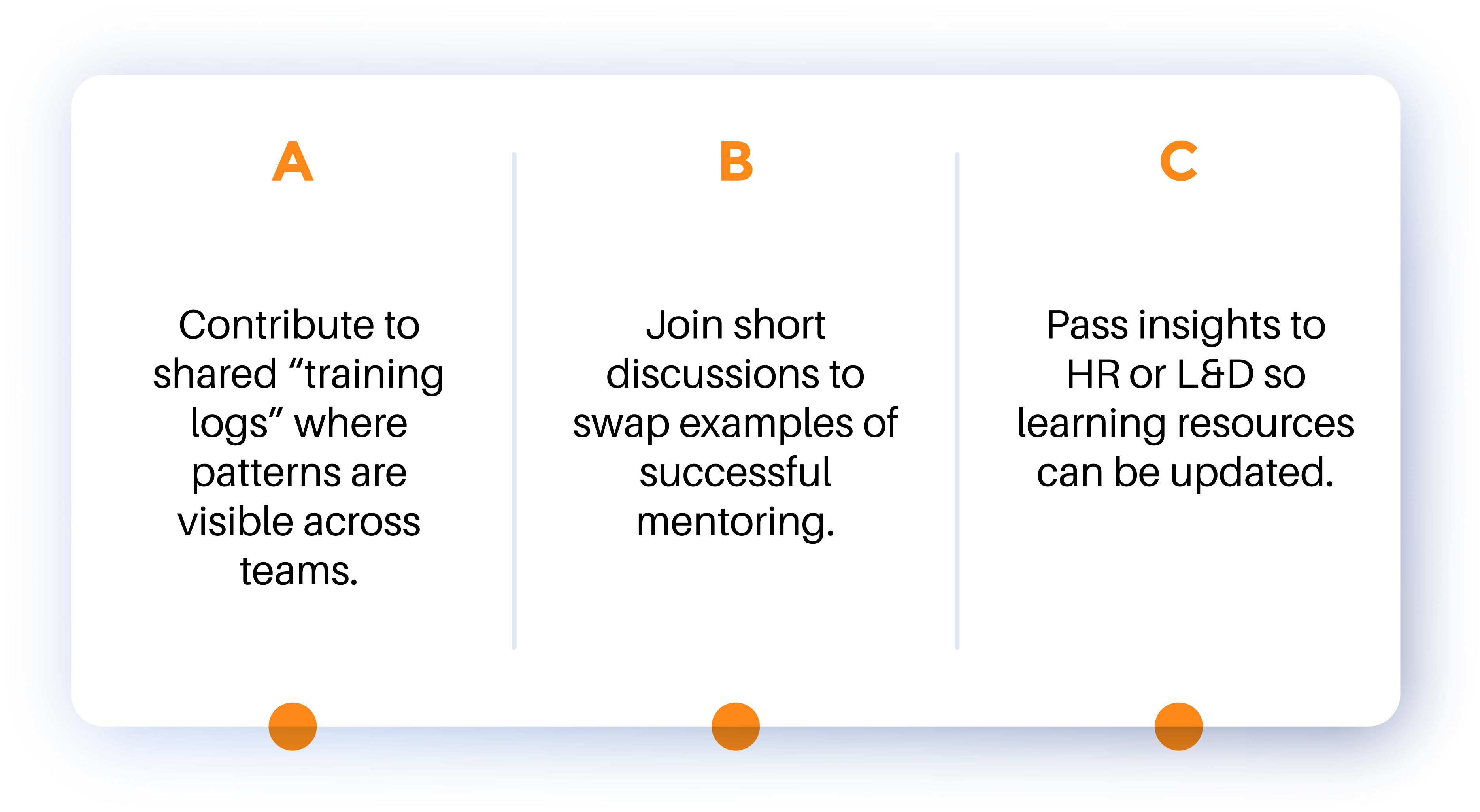
Reflection turns individual corrections into collective progress. AI grows faster when mentoring knowledge circulates across your workplace.
What Your Employees Should Track
For AI mentoring to succeed, your employees need to know what to look for. The following signals help them see whether their teaching is working:
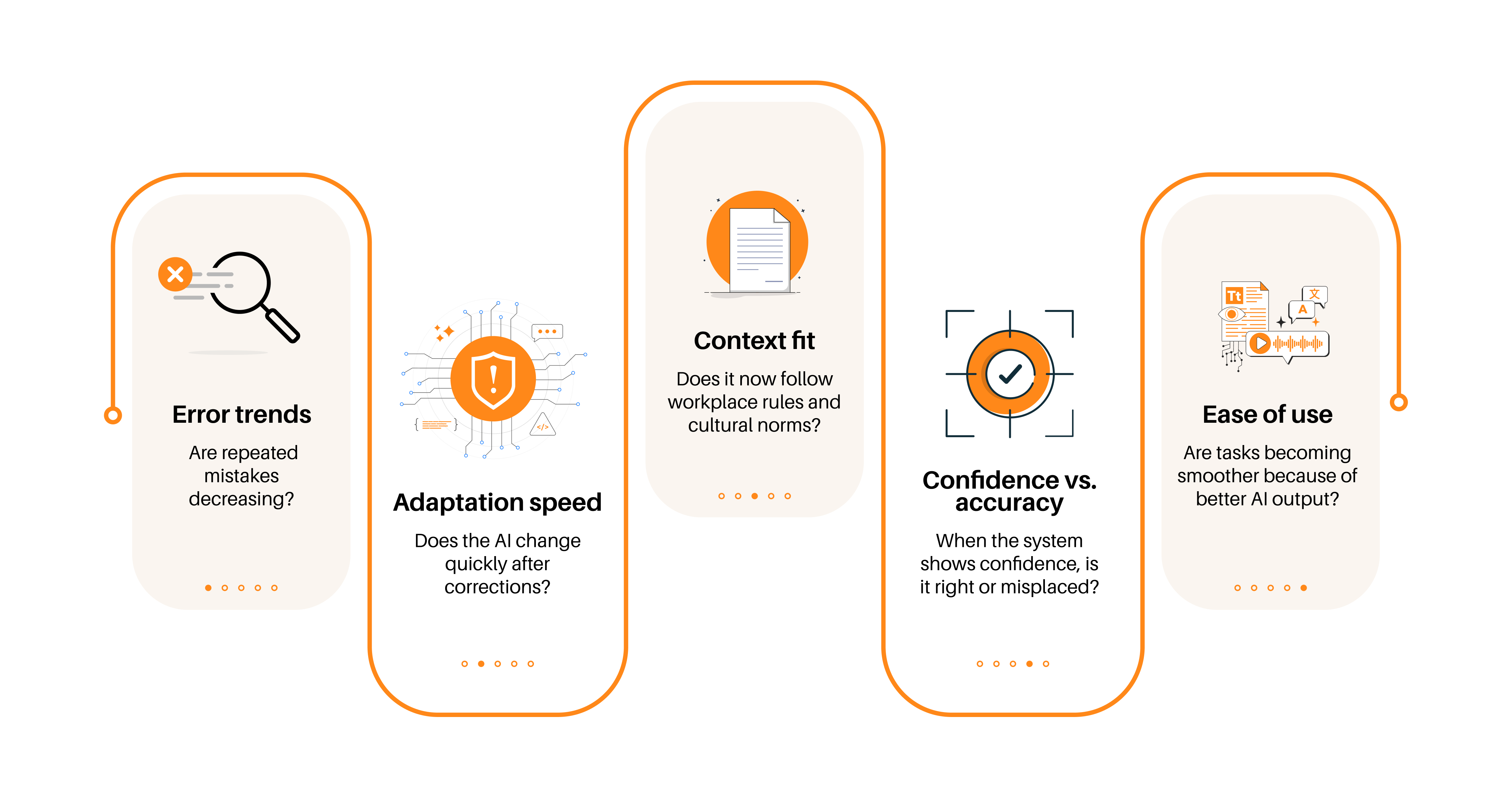
Tracking these signals builds trust. Your employees see proof that their mentoring matters.
Top Skills Employees Should Build to Train and Use AI Effectively
For reverse mentoring to succeed, employees need more than intuition. They need skills that help them guide AI consistently and use it effectively in daily work. The following areas are essential:
- Critical Thinking: Ability to question AI outputs, spot gaps, and distinguish between correct and misleading results.
- Data Literacy: Understanding how information is collected, structured, and applied so feedback to AI systems is meaningful.
- Prompt Engineering: Knowing how to design effective prompts so AI delivers relevant, accurate, and context-aware responses.
- Communication Skills: Providing clear, precise feedback and rewriting AI responses in a tone that reflects company standards.
- Context Awareness: Recognizing cultural, regulatory, and workplace nuances that AI often misses.
- Problem-Solving: Testing AI with complex cases and identifying practical adjustments when the system falls short.
- Ethical Awareness: Knowing how to flag bias, protect sensitive data, and ensure compliance in AI use.
- Collaboration: Sharing insights with colleagues so AI improvements are collective, not isolated.
- Adaptability: Staying comfortable as AI tools evolve, learning new interfaces, and adjusting mentoring practices over time.
KnowledgeCity’s expertly crafted courses are designed to develop these essential skills in your teams, ensuring they can confidently mentor AI and apply it effectively across your workplace.
The Role of HR and L&D in Enabling Mentoring
Your employees do the teaching. HR and L&D make it possible. Your responsibility is to design the structures, skills, and culture that support mentoring. The goal is to create an environment for success rather than managing every correction.
Key actions include:
- Training and orientation: Show employees how to observe, correct, and provide context effectively.
- Tool access: Provide easy platforms where feedback can be logged and tracked.
- Clear expectations: Set mentoring as part of normal work, not an optional add-on.
- Recognition: Acknowledge and reward contributions that improve AI.
- Cross-team spaces: Facilitate sharing of mentoring practices across departments.
By enabling these foundations, HR and L&D ensure that mentoring becomes routine and rewarding.
Reverse mentoring works best when it involves the whole organization. Customer-facing staff bring insight into tone and empathy. Compliance teams provide knowledge of regulations. Technical specialists share details about system workflows. Each group contributes a part of the picture.
Leaders should talk openly about the value of employee guidance. Managers should encourage teams to dedicate time for feedback and testing. Employees should be reminded that their expertise shapes how AI learns and grows.
As the best employee training platform in the USA, we help organizations turn shared learning into lasting progress. Our courses help employees develop practical skills, from problem-solving and communication to guiding AI effectively. With our platform, your teams can improve AI performance, apply learning in daily work, and build a culture of shared knowledge across your organization.