
A team member used to knock on the door when they were stuck. Now they type a question into an LLM and keep going. Reports that once sparked a meeting arrive polished by software. Problems that used to gather people into late-night war rooms now disappear before anyone even notices.
Many leaders are beginning to notice a change. They still hold meetings and set direction, but the daily touchpoints that once built closeness with their teams have become less common. The effect is subtle. Leaders are getting work done faster, yet they feel further away from their people.
This is the quiet shift happening in workplaces today. The concern is whether leaders are starting to lose the emotional connection that makes people want to follow them.
Why Connection Holds Teams Together
Leadership has always been more than assigning work. Teams thrive when they feel noticed, supported, and understood. A leader who listens and responds builds trust. A leader who recognizes effort builds loyalty. These simple connections are what carry people through deadlines, uncertainty, and change.
When that connection weakens, people still perform their roles, but the energy shifts. Instead of feeling proud of their work, they focus only on finishing tasks. Instead of pushing forward with ideas, they hold back. The drive that once came from feeling connected to a leader begins to fade.
For many years, connection grew naturally out of shared challenges. A system outage would have engineers and managers working late together. A client emergency would bring a leader and their team into the same room to brainstorm solutions. In those moments, leaders were not only problem solvers; they were sources of calm, reassurance, and encouragement. Those experiences built bonds that lasted.
Automation changes this pattern. An AI-powered monitoring system prevents outages before they happen. An LLM prepares reports so there is no late-night scramble. A chatbot answers questions that once required a leader’s advice. The work gets done, often faster, but the moments that created closeness no longer occur.
The gain is efficiency. The loss is the human contact that once came naturally during challenges.
The Risk of Leaders Becoming Distant
The real danger is not that leaders lose their role. It is that they slowly become less present in the daily lives of their teams.
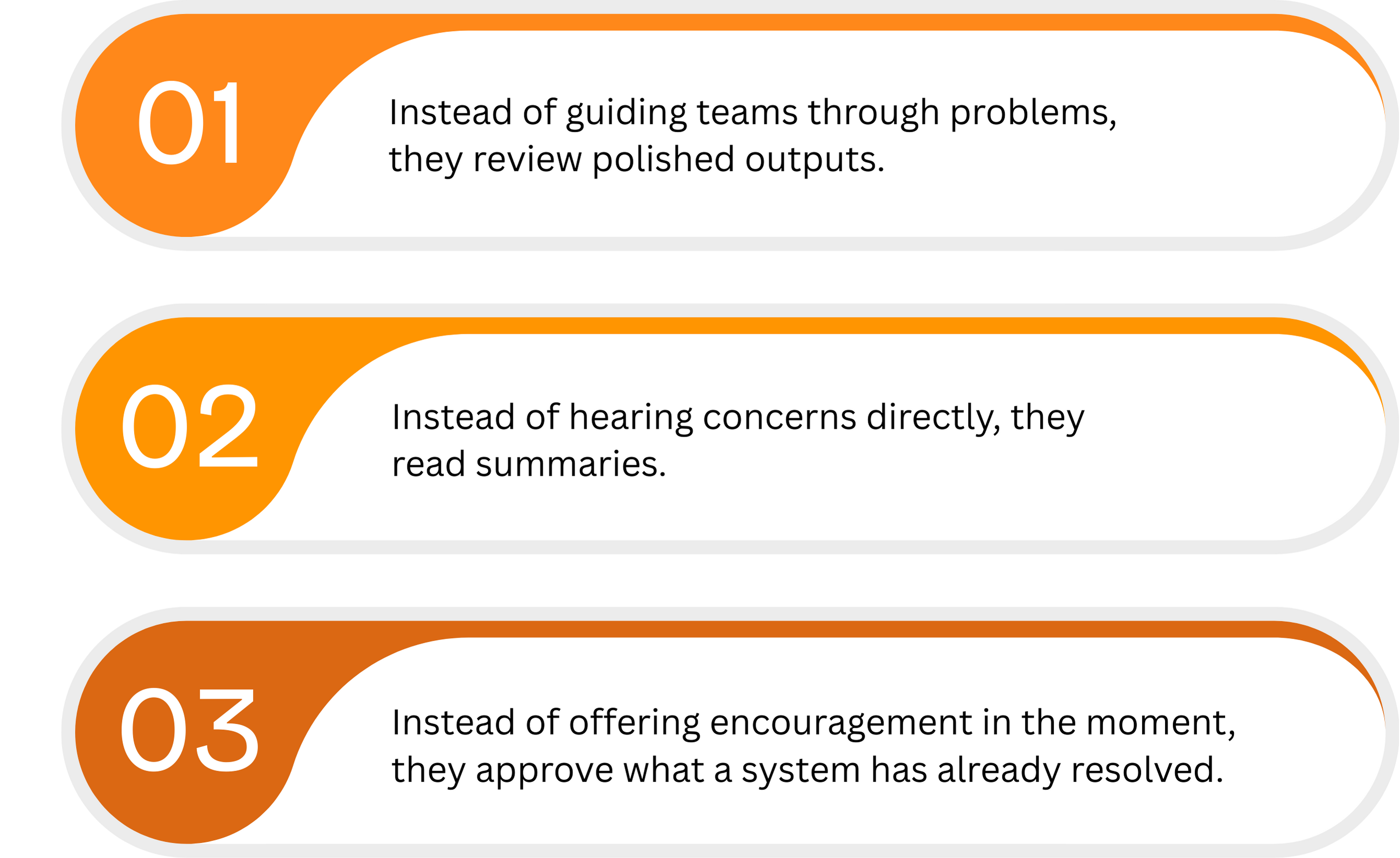
Employees notice this absence. A perfectly formatted report cannot replace the pride of solving something together. A generic thank-you message does not convey the same sense of appreciation as hearing it in person. Over time, people begin to feel unseen. Work continues, but the bond with leadership weakens.
Signals That Connection Is Slipping
This erosion often starts quietly. Leaders who want to stay close to their people can look for early signs:
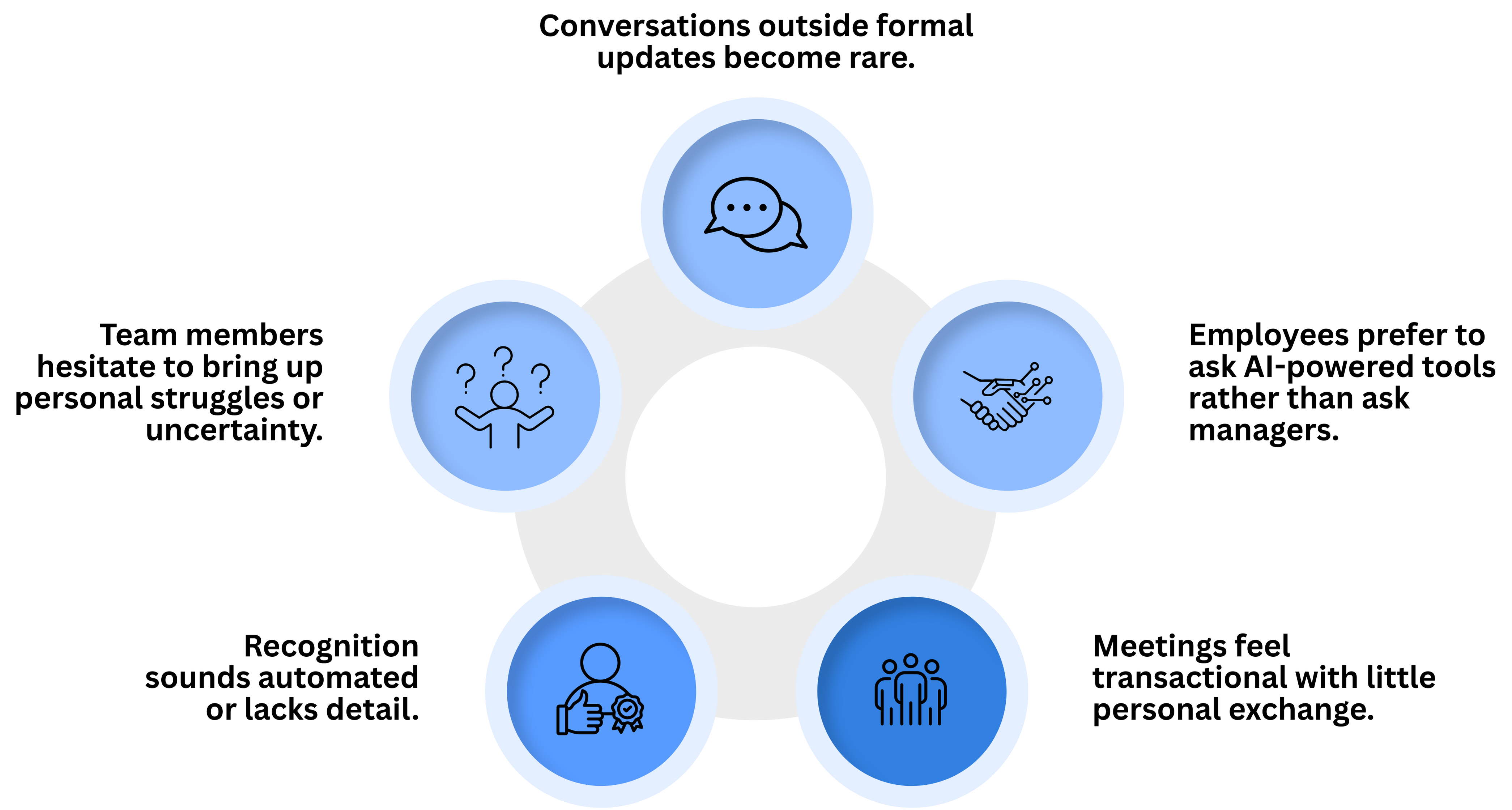
These are not just communication gaps. They reveal how much space has opened between leaders and their teams.
Turning Efficiency Into Opportunity for Connection
Leaders cannot and should not ignore automation. It brings speed and accuracy that no team would want to lose. The key is to turn the time saved into time invested in people. Leaders who do this strengthen their role rather than weaken it.
Here are some concrete practices leaders can adopt:
1. The 3×3 Rule
Spend three minutes each day with three different people in real conversation. It can be a casual question, a thank-you, or a quick check-in. Over a week, this creates dozens of small interactions that keep leaders visible and approachable.
2. Friday Wrap-Ups
End the week with recognition that is personal and specific. Instead of a generic “good job, team,” mention exact contributions: who solved a tough problem, who supported a colleague, who showed resilience under stress. Recognition lands deeply when it feels thoughtful.
3. Stay Present When Pressure Builds
When things go wrong, resist the urge to let systems take over completely. A leader who is visible and calm in tense situations gives comfort that no machine can provide.
4. Replace Task Time with Real Conversations
If automation reduces routine work, use those hours to sit with employees. Ask about their challenges, their growth, and their hopes. Listening with focus rebuilds the connection that dashboards cannot provide.
5. Recognize in a Personal Way
Generic praise is forgettable. Recognition that mentions a specific effort or decision tells people they were truly seen.
6. Talk Honestly About Change
Many employees wonder what automation means for their careers and futures. Leaders who acknowledge this openly ease fears and build trust, even if they do not have every answer.
7. Show Your Own Growth
When leaders admit they are still learning, it encourages others to be open too. This shared vulnerability makes teams stronger.
Why Connection Is the True Differentiator
Every organization can buy the same technology. What they cannot buy is the trust, loyalty, and energy that come from genuine human connection.
Teams that feel connected to their leaders show more resilience during change. They stay loyal even when opportunities appear elsewhere. They bring new ideas because they feel safe to speak. These are the qualities that sustain long-term success. No system, however advanced, can replicate them.
Building Balance for the Future
The strongest leaders of the future will not be defined only by how well they adopt tools. They will be defined by how well they preserve humanity alongside technology. Machines can deliver speed and precision. Leaders provide empathy and presence. Together, these strengths create teams that are both productive and deeply committed.
This balance does not appear on its own. Leaders must protect space for real conversations, recognition, and shared challenges. Small habits like weekly one-to-one talks, personal words of thanks, or being present during stressful moments keep the bond alive. These practices ensure that the heart of leadership remains strong even as work becomes more digital.
Final Reflection
So, are leaders losing emotional connection because of AI? The risk is real, and it rarely announces itself. It creeps in quietly through shorter conversations, through recognition that feels empty, and through the small distance leaders begin to feel from their people.
Connection no longer builds itself in the background of work. It needs to be chosen, protected, and practiced. Technology can give teams speed, but only leaders can give them belonging.
Every small action matters: a genuine thank-you, a moment of listening, a check-in when stress runs high. These are not extras. They are proof that people are more than tasks and that their presence matters. Teams may rely on tools for efficiency, but they look to leaders for care.
In the end, leadership will not be remembered for how much work was automated. It will be remembered for how many people felt valued, supported, and proud to be part of the journey. That is the connection no system can replace, and it is the connection that keeps leadership human.