
HR and L&D professionals focus heavily on technical skills, compliance, and workplace processes. These areas are essential, but there is one element that often gets less attention than it deserves: motivation.
Motivation is the force that drives employees to take initiative, stay engaged, and contribute their best. No matter how well training is designed, it won’t stick without genuine motivation.
Motivational training fills this gap. It gives employees the clarity, encouragement, and support they need to feel invested in their work. It also strengthens team connections and fosters a sense of purpose, helping employees see how their contributions matter. When organizations invest in motivation, employees are more productive, committed, and satisfied, creating a stronger culture and better outcomes for the entire organization.
In this blog, we will explore why motivational training matters, the principles behind it, and practical ways to make it effective and lasting.
Why Motivational Training Matters
Motivational training directly affects how much energy and focus employees bring to their roles. A motivated workforce contributes ideas, achieves higher performance, and delivers stronger customer experiences. Gallup research shows that organizations with engaged employees outperform those with disengaged teams, while the latter often face higher costs, weaker morale, and greater turnover.
The impact of motivational training can be seen in three main areas:
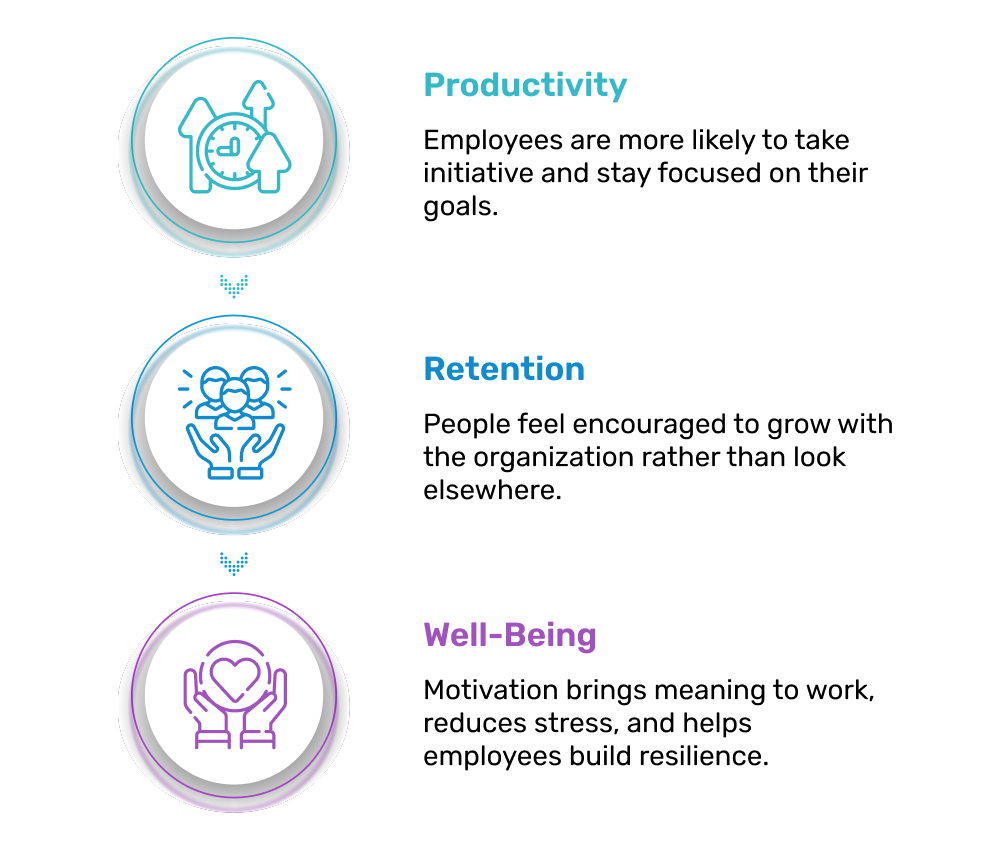
When these benefits come together, they create a positive cycle of productivity, loyalty, and well-being for both individuals and the organization. To strengthen this cycle, it’s useful to understand the psychology behind motivation and the theories that guide effective training.
Theories That Explain Work Motivation
Motivational training works best when it is based on research-backed theories. These models explain what inspires people at work and provide a foundation for building effective programs.
- Self-Determination Theory: Explains that people are most motivated when they feel autonomy, build competence, and experience supportive relationships. Training that encourages ownership and skill-building taps into these drivers of engagement.
- Goal-Setting Theory: Shows that clear and challenging goals keep employees focused and committed. When training helps people define objectives and use feedback effectively, motivation and performance both improve.
- Job Characteristics Model: Emphasizes that motivation increases when work offers variety, meaning, autonomy, and regular feedback. Training can guide leaders in shaping roles and tasks that make employees feel more satisfied and energized.
- Two-Factor Theory: Highlights the difference between hygiene factors, which prevent dissatisfaction, and motivators, which create enthusiasm. Training supports organizations in reducing barriers such as unclear policies while strengthening motivators like recognition and growth opportunities.
These theories are more than concepts. They give structure to motivational training and ensure that programs address the real factors that influence how people think and perform at work.
What Motivational Training Covers
Motivational training is not a single session. It is a series of experiences that bring inspiration, teach practical skills, and encourage employees to apply what they learn in meaningful ways.
Core elements often include:
- Manager coaching that helps leaders provide supportive feedback and give employees the autonomy they need to succeed.
- Recognition programs that make sure contributions are valued and celebrated consistently.
- Goal-setting workshops that give employees clarity on priorities and help them create a path toward achievement.
- Career development pathways that show employees how they can grow within the organization.
In addition to these essentials, training may also include activities that connect employees with purpose, strengthen psychological safety, build resilience, and allow individuals to shape their roles around their strengths and interests.
By combining these elements, motivational training ensures employees are inspired and equipped to act on that inspiration. Once the content is clear, the question becomes: how should training be designed and delivered for maximum impact?
Step by Step: Designing, Delivering, and Scaling Motivational Training
Motivational training works best when it follows a clear, structured path. Here’s a practical approach organizations can use to create learning that lasts and drives real results:
1. Understand Where Motivation Is Needed
Start by identifying the gaps. Use surveys, interviews, and performance data to uncover where employees feel disengaged, overwhelmed, or unclear about expectations. Understanding the real challenges ensures the training addresses the right issues from the start.
2. Set Clear, Measurable Goals
Define what success looks like. Goals could include higher engagement, lower turnover, or stronger customer satisfaction. Having measurable outcomes helps employees and leaders track progress and understand the value of the training.
3. Ground Training in Proven Motivation Principles
Motivation doesn’t happen by chance. Align your program with well-researched models, like Self-Determination Theory or Herzberg’s Two-Factor Theory. These frameworks provide a roadmap for designing activities that genuinely inspire and engage employees.
4. Make Learning Hands-On and Relevant
Adults learn best by doing. Incorporate workshops, role plays, and peer coaching that allow employees to practice new skills in realistic scenarios. When training connects directly to daily tasks, employees are more likely to apply what they learn immediately.
5. Reinforce Lessons Continuously
Motivation fades if training ends with the final session. Use follow-ups, microlearning modules, and regular check-ins to help employees practice new behaviors consistently. Reinforcement ensures the lessons turn into lasting habits rather than temporary inspiration.
Measure both behavioral changes and business outcomes. Look at engagement surveys, feedback patterns, and performance metrics. Sharing results with employees highlights progress and keeps motivation strong, creating a cycle of continuous improvement.
This process ensures training is not just a short-term boost but a sustained effort. Once the foundation is built, attention turns to the daily techniques that keep energy alive.
Practical Techniques to Inspire and Energize the Workforce
Motivational training becomes truly effective when paired with simple practices that leaders and teams use every day. For instance:
1. Recognition
People feel most engaged when their efforts are noticed. Recognition works best when it is timely and specific. Acknowledging exactly what someone did well reinforces positive behavior and sets clear examples for others.
2. Goal Setting
Challenging yet realistic goals give direction and purpose. Breaking big objectives into smaller milestones helps teams track progress and feel encouraged along the way.
3. Autonomy and Job Crafting
Giving employees ownership of their tasks makes work more meaningful. Flexibility in how goals are achieved and opportunities to shape roles around strengths improve both motivation and satisfaction.
4. Peer Coaching
When colleagues support and guide one another, accountability increases. Peer coaching builds trust, encourages shared problem-solving, and strengthens team spirit.
5. Psychological Safety Rituals
Trust is essential for motivation. Practices like regular check-ins, open feedback sessions, and safe spaces for ideas allow people to speak up and take initiative without fear of judgment.
When applied consistently, these techniques transform motivation from a one-time event into a lasting workplace culture.
How to Measure Success: Metrics That Matter
To understand the value of motivational training, outcomes should be measured at different levels:
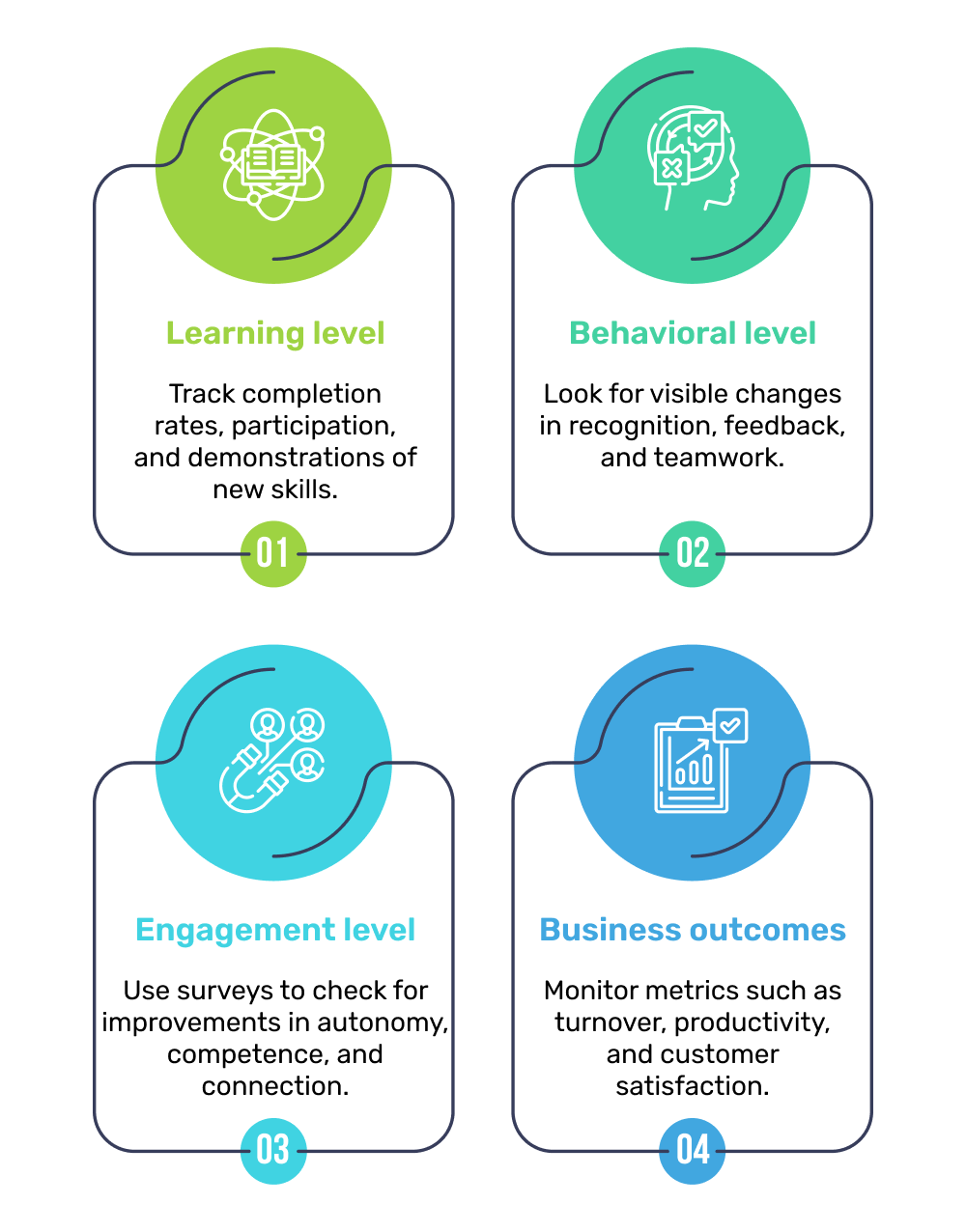
Frameworks like Kirkpatrick’s Model help connect learning results with business impact. With clear metrics in place, organizations can see whether training is driving long-term change.
Common Pitfalls and How to Avoid Them
To make motivational training effective, it’s essential to anticipate and address the obstacles that often undermine results.
Common pitfalls include:
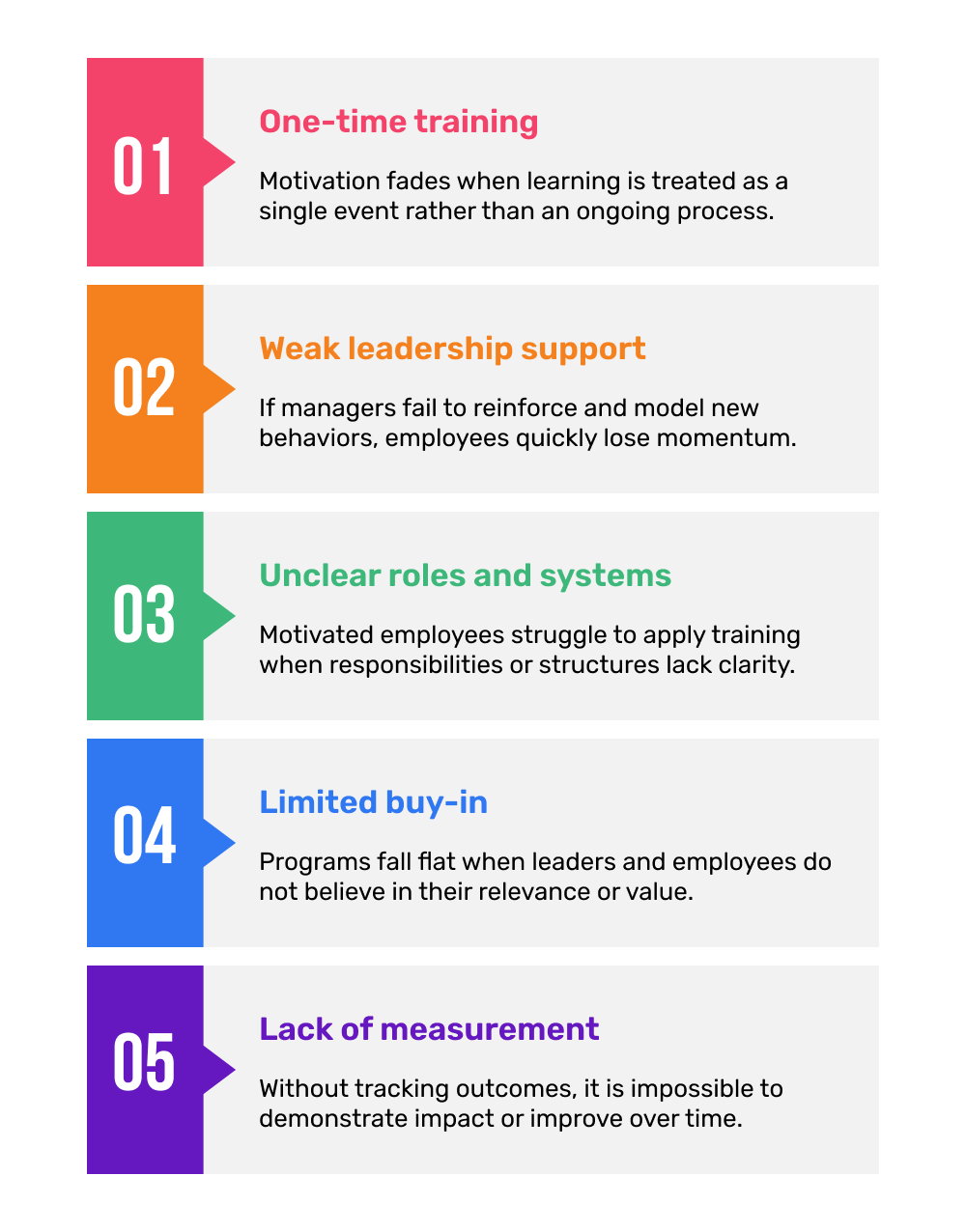
Avoiding these mistakes requires embedding reinforcement into the program, aligning training with organizational systems, equipping managers with tools, and defining success from the start.
Wrapping It Up
Investing in motivational training sets the stage for a more engaged, productive, and resilient workforce. To support organizations in this journey, KnowledgeCity, the best employee training platform in the USA, offers a comprehensive learning library with 50,000+ premium training videos covering every aspect of the workplace, from management and leadership to employee well-being and professional development. With resources designed to inspire, guide, and equip employees at every level, KnowledgeCity makes it easier for leaders to build a culture where motivation thrives and results follow.