
Life is a series of decisions. From the small, almost invisible ones to the defining moments that reshape our future, the choices we make guide our personal and professional paths. Within organizations, the story is no different. Every milestone rests on a decision, whether it’s hiring a new colleague, launching a training program, choosing to adopt an AI-powered learning system, or adding a feature that could transform a product. Each choice, no matter how routine it may seem, carries the power to shape the culture, direction, and strength of the organization.
But decision-making is rarely simple. Teams must often weigh limited information, competing perspectives, and the urgency of deadlines. When choices fall short, the impact goes beyond one meeting. They affect trust, slow progress, and disrupt how the team works together.
This is where artificial intelligence is stepping in, not as a replacement for human judgment, but to help teams understand more, analyze better, and make decisions with confidence.
What Is AI-Driven Decision-Making?
AI-driven decision-making is the use of machine learning, natural language processing, and predictive analytics to support or automate organizational choices. These technologies can process large amounts of information, detect patterns, and recommend actions that humans alone may miss.
Unlike traditional tools that follow fixed rules, AI systems keep learning as new data appears. This allows them to adjust recommendations and highlight insights that are not obvious. For organizations, this means decisions are no longer built only on memory or intuition but on a broader and more accurate view of reality.
For HR and L&D leaders, this shift is about capability. Employees at every level need to know how to interpret AI insights, how to combine them with human judgment, and how to apply them responsibly.
The Three Models of AI Decision-Making
AI supports organizational decisions in three primary ways:
1. Decision Support
AI provides recommendations while leaving the final choice with humans. For example, talent acquisition systems that rank candidates based on job requirements allow recruiters to focus on the most promising applicants without replacing their judgment.
2. Decision Augmentation
In this model, humans and AI collaborate. AI handles large-scale data processing, while humans bring context, ethics, and strategic perspective. An example is workforce planning, where AI identifies turnover risks and hiring needs, and HR leaders decide how to act based on cultural and financial considerations.
3. Decision Automation
Here, AI makes routine choices with minimal human involvement. Payroll processing, benefits administration, or compliance checks are common examples. Automation frees teams to focus on complex challenges where human input adds unique value.
Understanding these models allows HR and L&D leaders to frame AI not as a threat to human judgment but as a set of tools that expand decision capacity in different ways.
Why Teams Struggle in Decision-Making Without AI
Even the most skilled teams face natural obstacles such as:
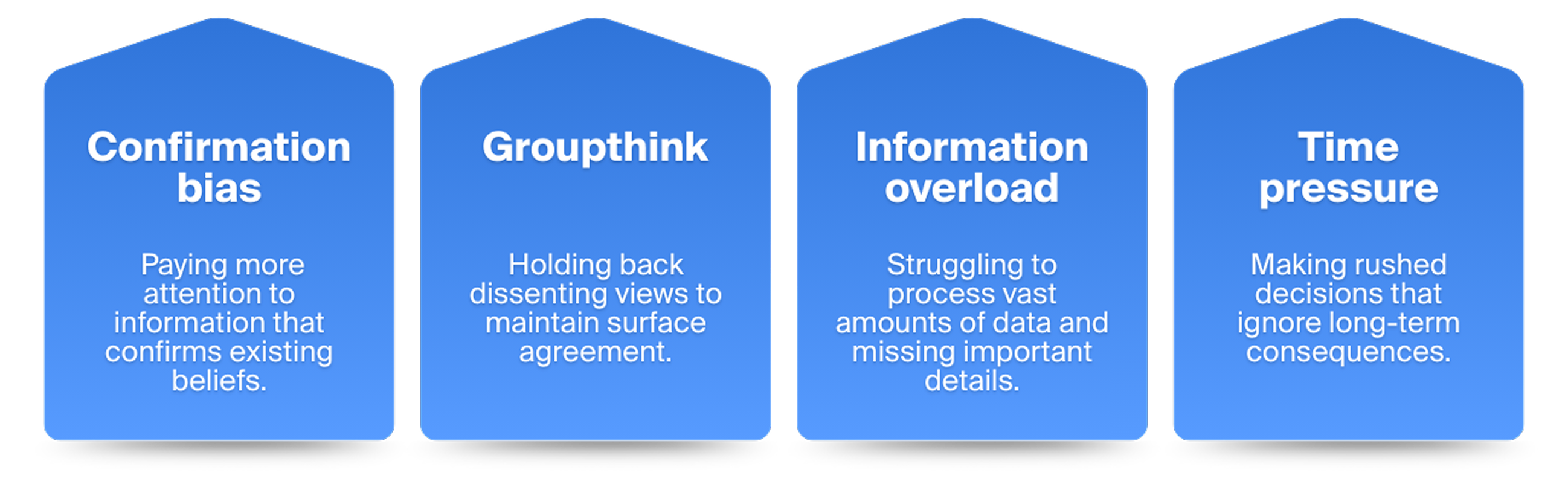
These tendencies weaken decisions and slow progress. Without support, teams risk repeating the same mistakes, even when the stakes are high. This is where AI creates value, but only if employees are trained to use it wisely.
8 Ways AI Enhances Team Decision-Making
AI expands human potential in multiple practical ways. Below are eight key ways it strengthens decisions and supports better outcomes.
1. Expanding Human Capability
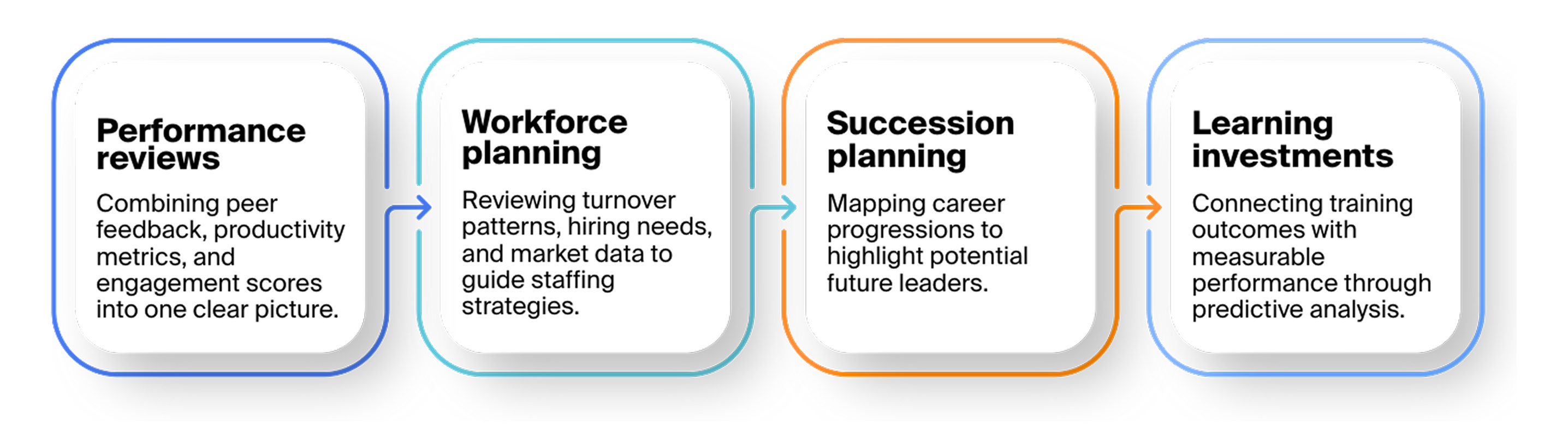
AI processes information at a scale and speed beyond human ability. Reports, customer feedback, financial records, and market trends can be analyzed in moments, giving teams a more complete picture before they choose a direction.
Examples include:
2. Making Decisions More Objective
Human judgment is shaped by emotions, habits, and social influence. AI balances this by providing analysis grounded in data.
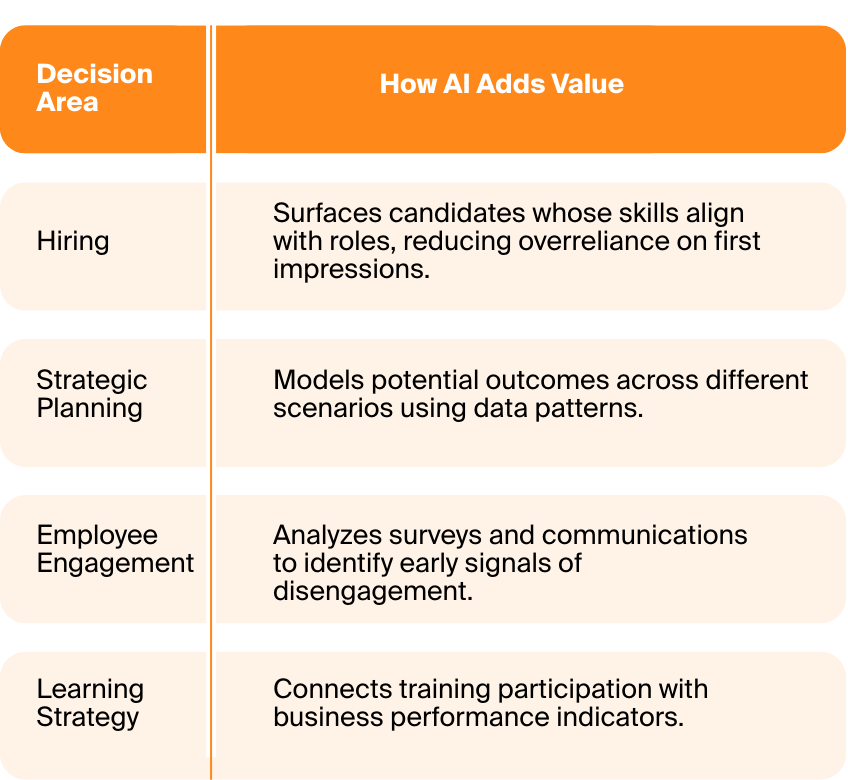
With these inputs, teams ground their debates in evidence. People still bring values and vision, but AI provides the clarity that supports fairness and transparency.
3. Strengthening Cross-Functional Collaboration
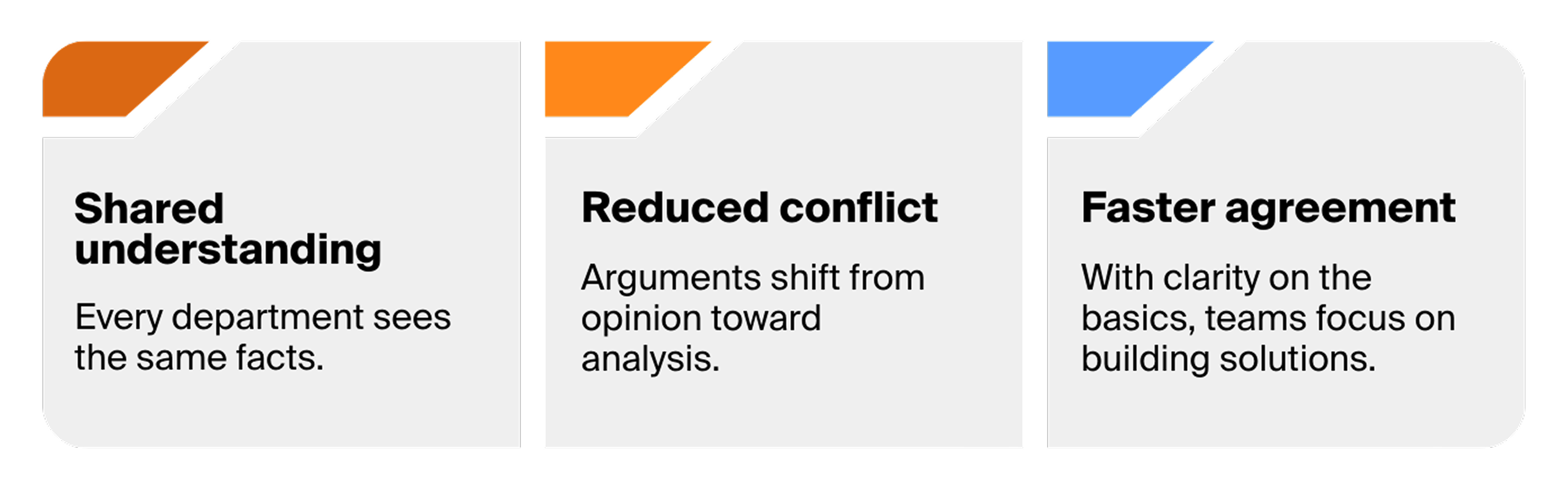
Organizations are networks of departments, each holding different parts of the truth. Decisions slow down when departments defend their own perspectives rather than share them.
AI platforms integrate information from across functions. When teams access unified dashboards, they see customer, financial, and operational data together. This creates:
4. Detecting Risks Before They Grow
Predictive models reveal risks early, giving teams time to prepare.
Examples include:
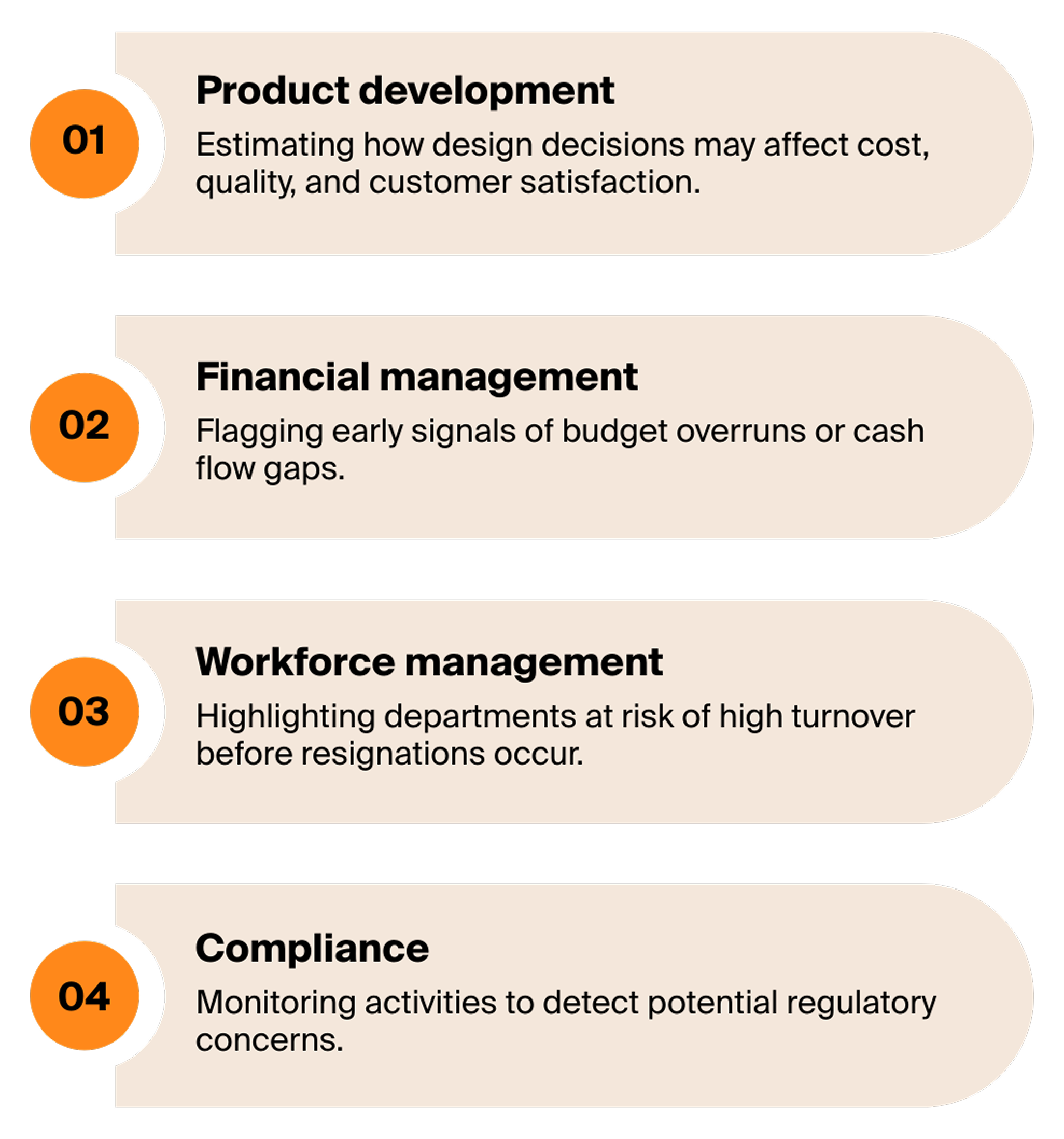
This shift from reactive to proactive decision-making creates stability and resilience.
5. Encouraging Broader Thinking
AI introduces perspectives that teams might not surface on their own. Instead of following the loudest voices, employees can explore new angles:
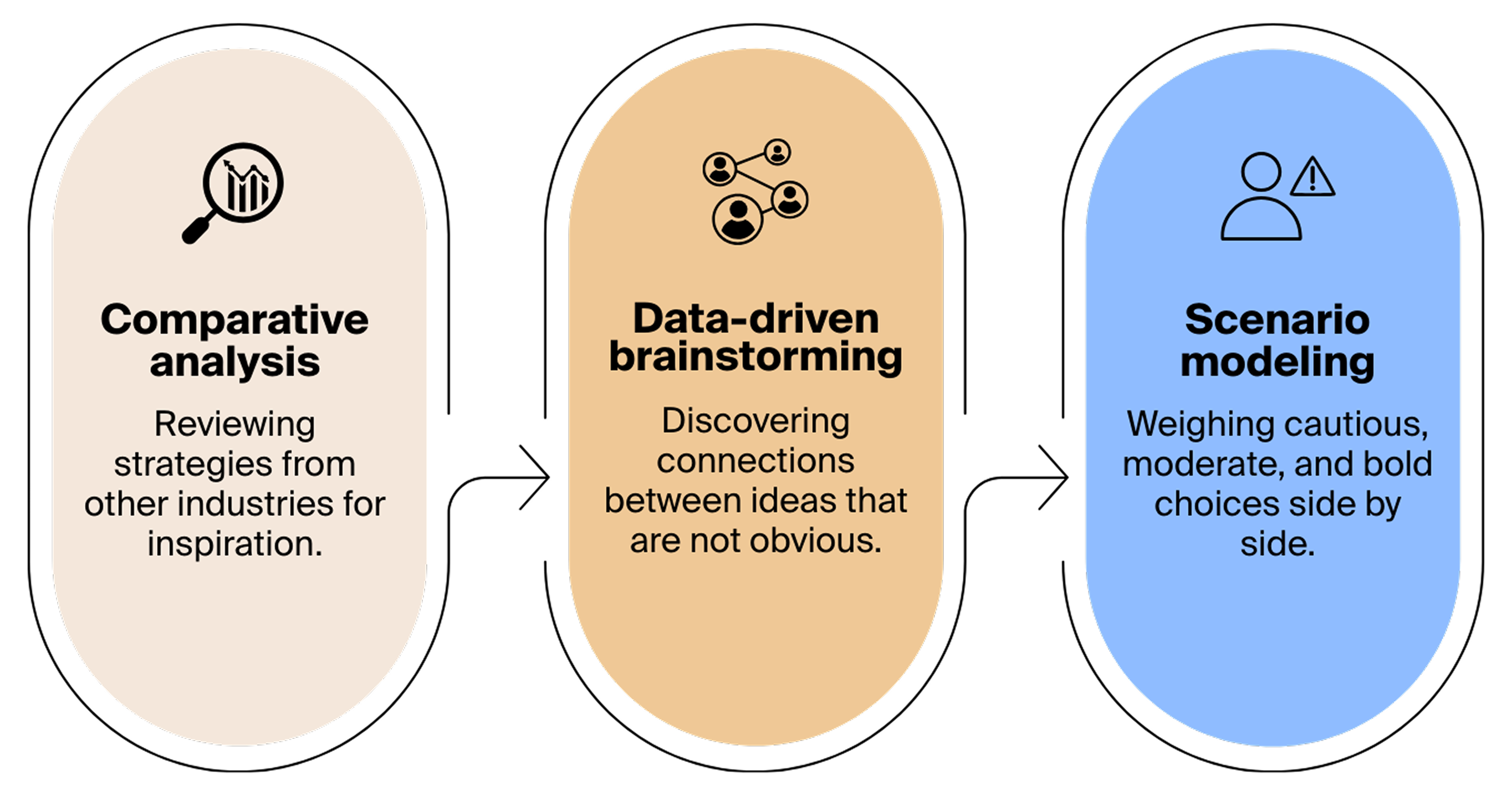
Exposure to wider inputs teaches teams to value diversity of thought and innovation.
6. Balancing Speed With Quality
Organizations often feel forced to choose between acting quickly and making thorough decisions. AI helps resolve this tension.
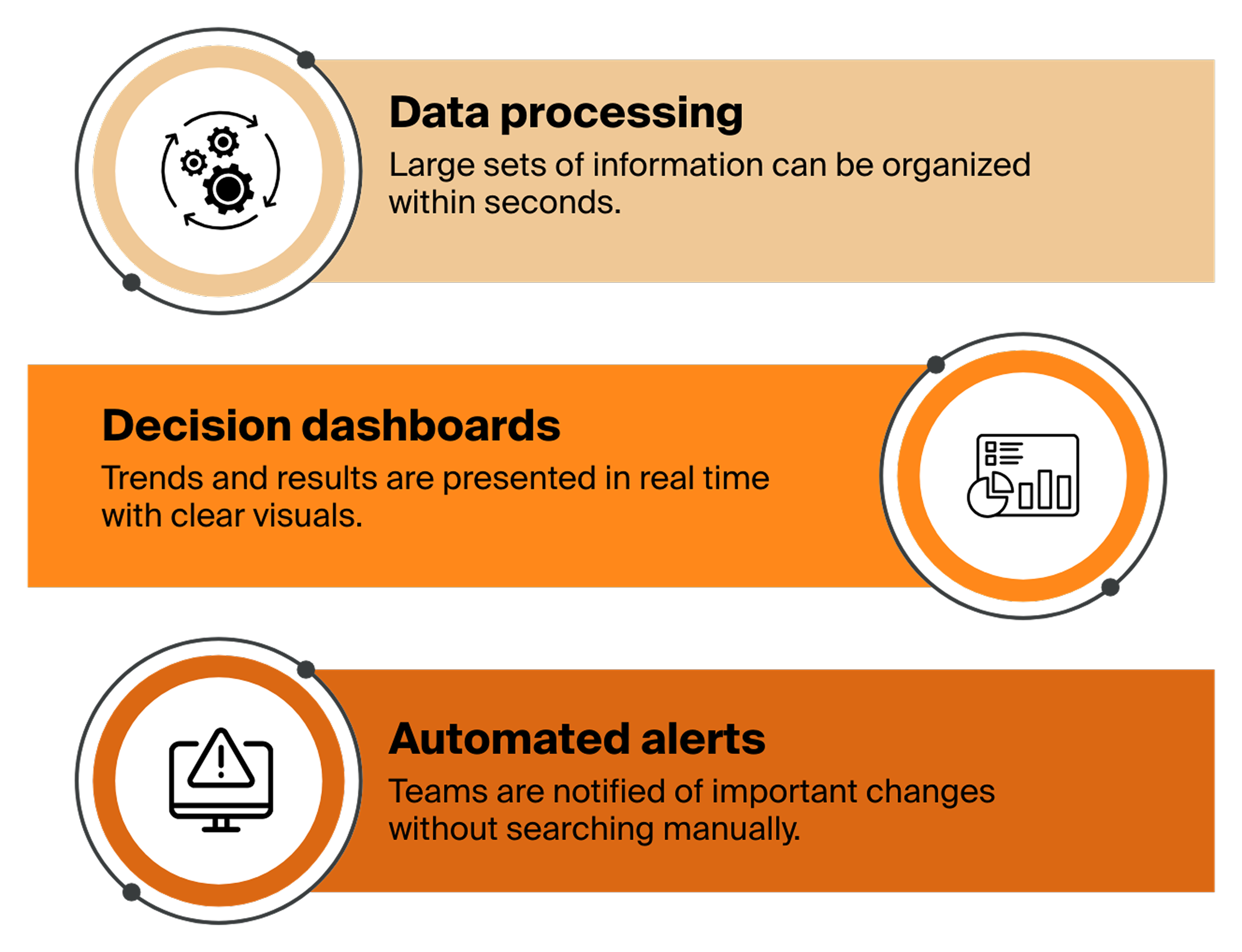
With this support, teams dedicate less time to mechanical work and more to thoughtful discussion.
7. Building Trust Through Evidence
For teams to contribute fully, they need psychological safety. AI supports this environment by grounding disagreements in shared data rather than personal standing.
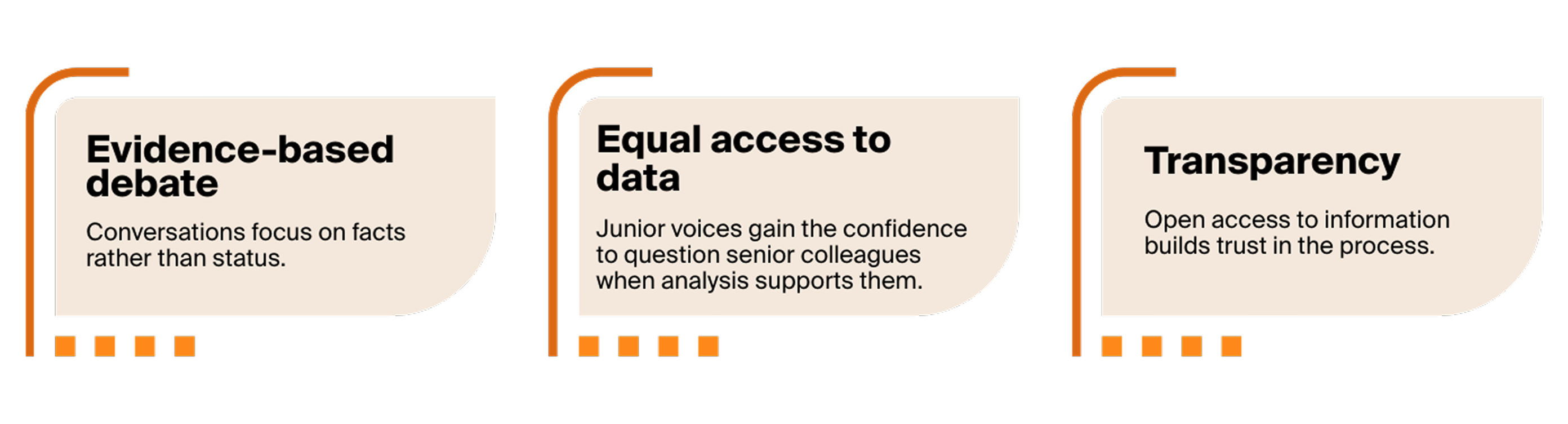
This fairness encourages employees to participate, challenge, and create together.
8. Guiding Human Judgment and Ethics
AI brings scale and speed, but people remain essential. Teams must interpret results in context, apply ethical reasoning, and choose directions that reflect culture and strategy.
Examples of ethics in action include:
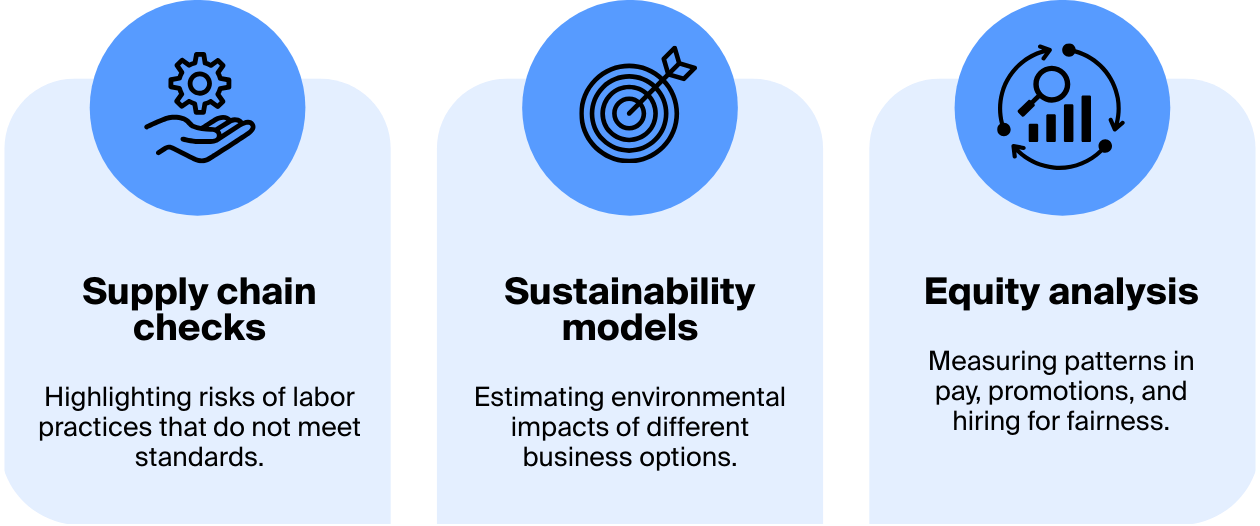
When AI highlights wider impacts, teams are better equipped to align business performance with responsibility.
Empower Your Teams with KnowledgeCity
Effective decision-making depends on three things: access to information, thoughtful interpretation, and strong collaboration. AI strengthens all three. It provides teams with relevant data, highlights potential risks, and uncovers ethical considerations that might otherwise go unnoticed.
But AI alone isn’t enough. Human insight adds meaning, empathy, and vision, qualities AI cannot replicate. When your people combine their judgment with AI-powered analysis, decisions are smarter, faster, and more ethically grounded.
At KnowledgeCity, we train your teams to make this combination possible. As the best employee training platform in the USA, we help them use AI responsibly, interpret insights accurately, integrate evidence into decisions, and uphold ethical standards. With KnowledgeCity, your teams become more capable, confident, and connected, making better decisions at every level.