
Every HR and L&D leader knows the weight of being caught between two pressures: the pace of change and the expectation to keep people ready for it. You see roles shifting faster than employees can adapt. Skills that felt stable a year ago are now in question. At the same time, executives want reassurance that investments in training deliver positive results. And employees themselves, busy, stretched, and uncertain, need clarity about how learning will help their careers, not just their current jobs.
This is where artificial intelligence becomes less about technology and more about enabling focus. It allows HR and L&D professionals to move beyond outdated assessments, generic courses, and one-off workshops. Instead, it gives you the insights to design development that is timely, personal, and aligned with both employee aspirations and organizational goals.
In this blog, we will explore what upskilling and reskilling mean, why AI plays a critical role in both, and 9 practical ways HR and L&D teams can apply AI to prepare their workforce for the future.
What Upskilling Means
Upskilling is about helping employees strengthen or expand their current capabilities so they can perform better in their existing roles. This might involve training a customer service team on new communication tools or teaching project managers data analysis techniques to improve decision-making. The benefit is twofold: employees stay sharp and motivated, while the organization adapts to market changes without major disruption.
By focusing on upskilling, HR teams create a responsive workforce that can keep pace with change rather than lag behind it. And when upskilling is paired with the right use of AI, the process becomes more precise and efficient.
How Reskilling Differs
Reskilling, in contrast, is about enabling employees to transition into entirely new roles. This becomes necessary when a role fades out, technology replaces key tasks, or the organization shifts direction. For example, a data entry specialist might reskill into a business analyst role after training in data visualization tools.
Reskilling not only protects employees from redundancy but also helps organizations retain valuable talent that already knows the culture and values of the company. With AI-driven tools to map career paths and identify skill overlaps, reskilling becomes more practical and less disruptive for both employers and employees.
Why AI Matters in Upskilling and Reskilling
Before HR and L&D teams can act, they need clarity on what skills exist across the workforce, which are missing, and how those map to future needs. Traditionally, this required endless spreadsheets, surveys, and manual reviews. AI changes this by scanning employee profiles, job descriptions, training history, and even external labor trends to highlight where skills gaps are forming.
For employees, AI can recommend training opportunities that are directly relevant to their current job or next career step. This level of personalization not only makes learning more effective but also strengthens employee engagement. When workers see that training aligns with their career growth, they are more likely to stay committed and motivated.
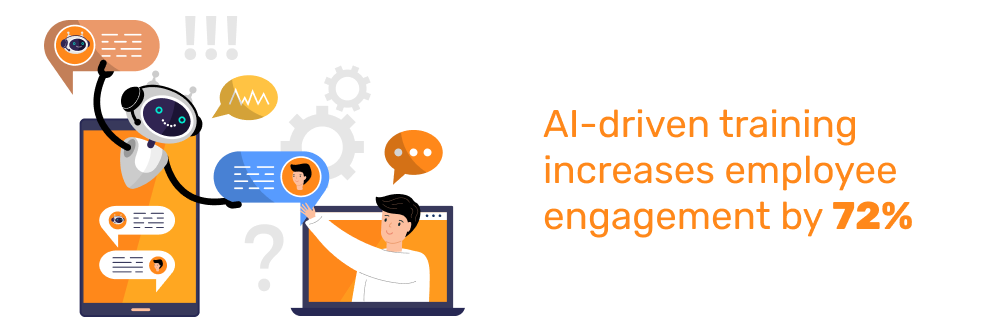
Before exploring how AI can help, it is important to remember this: technology alone does not drive change. The real impact comes from how HR and L&D leaders apply it to everyday workforce challenges. Once you understand the difference between upskilling and reskilling, the next step is practical: how can AI turn these strategies into measurable results?
9 Ways HR and L&D Professionals Can Use AI to Upskill and Reskill the Workforce
Here are 9 effective ways HR and L&D teams can use AI to upskill and reskill their workforce:
1. Map Skills in Real Time
AI creates a live and evolving skills inventory across the organization. This view goes beyond outdated resumes or static reviews, showing where employees excel, where gaps exist, and which roles require immediate attention. For example, if a department lacks data analysis expertise, AI identifies it quickly so you can launch targeted training. This makes learning investments more precise and easier to measure.
2. Create Personalized Learning Paths
AI aligns development opportunities with each employee’s role, strengths, and aspirations. Instead of assigning the same course to everyone, AI suggests training that matches individual goals. For instance, a marketing analyst who wants to move into leadership could receive modules in project management and communication, creating a clear path to growth. Personalized learning improves motivation, course completion, and long-term retention.
3. Adjust Learning Pace Automatically
Not all employees learn at the same speed. AI monitors progress and adjusts content delivery to match individual learning styles. Fast learners can move ahead, while others receive reinforcement until concepts are understood. This approach reduces frustration, saves time, and ensures knowledge is retained rather than rushed.
4. Recommend the Most Relevant Content
Employees are often overwhelmed by too many training options. AI filters this overload and recommends only what is directly tied to job requirements and career goals. For instance, a sales representative preparing for a product launch would receive training specific to that launch. This keeps learning focused and immediately useful.
5. Provide On-Demand Learning Support
AI-powered assistants act as always-available coaches. They answer questions, send reminders, and guide employees through learning challenges. A manager who needs a quick compliance refresher does not have to wait for HR. Support is available instantly within the platform, which allows learning to continue without interruption.
6. Practice Skills Safely Through Simulations
Employees build confidence by practicing in realistic but risk-free environments. AI enables simulations where they apply skills before using them on the job. Managers can rehearse difficult conversations, and customer service teams can practice handling challenging clients. Immediate feedback helps employees improve faster and perform with confidence.
7. Forecast Future Skill Needs
AI does more than highlight current challenges. It predicts future workforce requirements by analyzing trends such as turnover, promotions, retirements, and industry shifts. If AI anticipates a shortage of cybersecurity skills, HR can launch training in advance. This prevents costly disruptions and ensures the organization is prepared.
8. Scale Coaching and Feedback
Continuous feedback is essential but often difficult to deliver to every employee. AI makes it possible by analyzing performance and offering personalized insights. Managers can focus on employees who need the most support, while others receive automated feedback that keeps their growth on track. This creates a feedback system that is both personalized and scalable.
9. Embed Learning Into Daily Work
Instead of treating training as a separate activity, AI integrates learning directly into employees’ daily tasks. For example, a report-writing tool might recommend a micro-lesson on presenting data more effectively while an employee is preparing a report. This approach builds a culture where learning becomes a natural and ongoing part of work.
By applying AI in the areas outlined above, HR and L&D leaders can build a workforce that adapts quickly, learns continuously, and contributes with greater confidence. For deeper guidance on which AI tools to use, how to apply them, and practical steps to embed AI in your learning strategy, explore our courses. They provide detailed insights that make AI-driven development clear, actionable, and highly effective for your teams.
KnowledgeCity: Reskilling and Upskilling Made Manageable
KnowledgeCity brings advanced AI capabilities into a complete employee training platform that makes reskilling and upskilling achievable for HR, L&D, and employees alike. From identifying skill gaps with our AI-powered Training Needs Analysis to delivering role-specific learning paths and interactive content, every step is designed to be efficient and effective. Employees engage in learning that matches their pace, role, and career goals, turning training into meaningful, on-the-job growth. Gamified progress tracking and interactive exercises keep engagement high, while intelligent recommendations ensure continuous skill application.
For leaders, KnowledgeCity provides clarity and control. You can prioritize training investments, track measurable outcomes, and maintain a workforce that is prepared for the future. With KnowledgeCity, the best employee training platform in the USA, upskilling and reskilling become a structured, manageable process that helps your organization adapt, grow, and thrive while keeping teams focused on their work.