
Generation Z is entering the workforce at a moment unlike any before. They are the first professionals to start their careers with advanced digital tools fully embedded into everyday work. For many, this is exciting, but it brings uncertainty. A recent Gallup survey indicates that nearly half of Gen Z employees use AI tools weekly, but many admit they struggle to judge the accuracy or reliability of outputs.
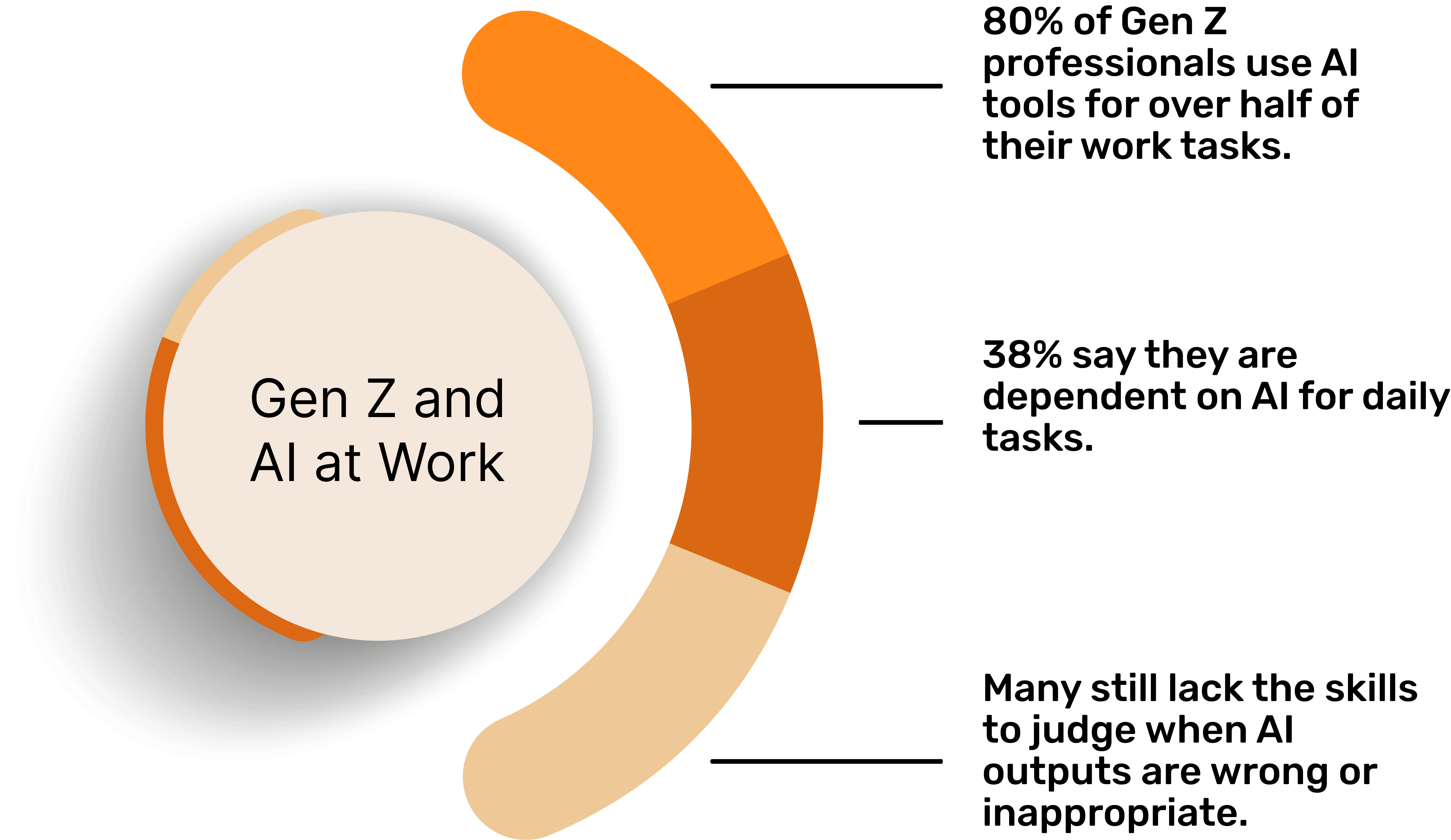
This creates a clear challenge for organizations: how to help Gen Z develop the judgment and skills to use technology responsibly while growing into confident professionals. With the right strategies, leaders can guide this generation to thrive in an AI-driven workplace.
In this blog, we will examine the challenges Gen Z faces in navigating technology at work, why these challenges matter for organizations, and how leaders can take deliberate actions to help young employees grow into confident, capable professionals.
Understanding the Confidence and Capability Gap
At first glance, Gen Z appears ready for modern work. They are fast learners, comfortable with digital tools, and open to experimentation. Yet research reveals a gap between confidence and capability. Many young employees assume that because they can operate tools effectively, they can also evaluate the results those tools provide.
This overconfidence introduces risks. Accepting AI-generated outputs at face value can lead to errors, poor decisions, and reduced work quality. At the same time, Gen Z’s enthusiasm and curiosity are valuable strengths. With structured guidance, these traits can be developed into critical thinking and sound judgment that will serve them well throughout their careers.
Why This Challenge Matters for Organizations
Workplaces have long been environments where employees develop skills such as problem-solving, communication, and teamwork through daily experiences. As automation reduces the number of routine tasks, opportunities to practice these foundational skills are shrinking.
If employees rely too heavily on digital tools without learning how to question or contextualize results, organizations may achieve short-term efficiency but struggle to cultivate future leaders. Critical thinking, collaboration, and resilience cannot be automated, and these are the qualities that drive sustainable growth.
Supporting Gen Z is therefore not just about productivity today. It is about building the talent pipeline for tomorrow.
How the Gap Begins Before Work
This challenge starts before young professionals enter the workforce. Many schools and universities restrict the use of advanced digital tools, positioning them as shortcuts rather than valuable learning aids. As a result, students graduate without consistent guidance on how to use these tools responsibly.
When they enter professional environments, the expectations are very different. Employers often assume that new hires can not only use technology but also evaluate its reliability. At the same time, traditional entry-level roles that once helped graduates learn through gradual responsibility are evolving or disappearing due to automation. This reduces opportunities for structured learning and mentorship at the very start of a career.
Organizations that acknowledge this mismatch between education and workplace expectations will be better prepared to guide Gen Z effectively.
How Leaders Can Help Gen Z Thrive
Leaders play a crucial role in shaping how Gen Z develops professional skills in an AI-driven workplace. The goal is not to limit the use of tools but to create environments where young employees learn how to integrate technology with judgment, collaboration, and creativity. The following strategies can make a significant difference.
1. Redesign Roles to Combine Digital and Human Learning
Early-career roles should not focus solely on technical execution. They should be designed to include opportunities for questioning, problem-solving, and decision-making. For example, instead of asking a new employee to generate a report with AI and submit it, leaders can ask them to evaluate the accuracy of the outputs, identify gaps, and present their conclusions to a team.
This approach develops both tool proficiency and critical reasoning, creating a stronger foundation for long-term growth.
2. Teach Employees How to Evaluate Outputs
Training programs should explicitly address how to assess digital outputs. Practical guidance should include:
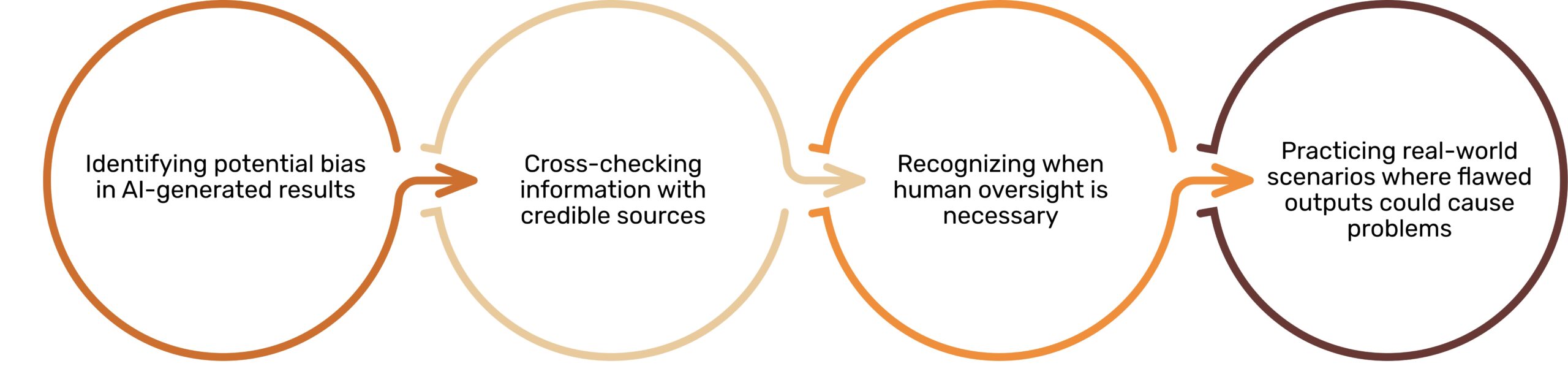
Embedding these skills into daily work ensures that employees do not passively accept results but learn to analyze and question them.
3. Pair Technical Training With Human Skills
Technical fluency is valuable, but it must grow alongside human capabilities such as communication, teamwork, leadership, and problem-solving. Leaders can achieve this balance by combining digital training with opportunities to practice soft skills through group projects, presentations, or cross-departmental collaboration.
This integration prepares employees to contribute not only as efficient executors but also as capable collaborators and future leaders.
4. Provide Mentorship and Reflective Feedback
Mentorship is especially important for Gen Z, who often seek growth and guidance as a priority. Leaders should provide consistent feedback that emphasizes reasoning and process, not just outcomes. For instance, when reviewing work, encourage employees to explain how they reached their conclusions. This practice strengthens accountability and builds confidence.
Pairing young employees with experienced mentors also accelerates professional development and builds resilience in navigating complex tasks.
5. Encourage Responsible Experimentation
Gen Z’s natural curiosity is a strength. Instead of restricting the use of new tools, leaders can create safe environments for experimentation. Assign low-stakes projects where employees can test emerging technologies, explore creative applications, and learn from mistakes. With clear boundaries and constructive feedback, this experimentation becomes a structured learning opportunity rather than a risk.
Moving Forward With Purpose
Gen Z brings adaptability, curiosity, and energy into the workplace. Their success depends on how well they combine digital proficiency with sound judgment. Leaders have an opportunity to shape this balance by creating environments where young professionals grow not only as efficient executors but as thoughtful decision-makers and future leaders.
Supporting Gen Z in an AI-driven workplace is not just about today’s productivity. It is an investment in building resilient, future-ready talent who will guide organizations through the next wave of change. By pairing digital fluency with critical thinking, accountability, and collaboration, companies can ensure this generation thrives while strengthening the broader workforce.
With KnowledgeCity, the best employee training platform in the USA, organizations can take deliberate steps toward this goal. Our courses help HR and L&D teams design learning pathways that embed critical thinking, foster mentorship, and align AI training with leadership development. This ensures Gen Z employees gain confidence without losing accountability, and organizations build the talent pipeline needed for long-term success.