
Every few years, a change arrives that reshapes how people work, learn, and grow. For Learning and Development (L&D) professionals, this is one of those moments. Artificial Intelligence (AI) is becoming part of everyday work, quietly transforming the way employees gain knowledge, build skills, and adapt to change.
Amid all the innovation and automation, one truth remains constant. Learning is deeply human. It thrives in curiosity, reflection, and connection. It grows through conversations, mentorship, and shared experiences that no algorithm can fully replicate.
At the same time, ignoring AI is not an option. The question is not whether AI belongs in learning, but how it can work alongside humans to make learning more meaningful, inclusive, and effective.
To achieve that balance, L&D professionals can consider three connected layers. The first is AI-Assisted Creation, the second is AI-Enhanced Delivery, and the third is AI-Driven Intelligence.
Together, these layers form a practical blueprint for building learning systems that are faster, more personalized, and aligned with both human potential and business goals. Let’s explore them in detail.
Layer 1: AI-Assisted Creation
Every learning experience begins with creation. Traditionally, building a training program required extensive time: researching, designing, reviewing, and aligning. AI is transforming that foundation by changing how content is produced and personalized.
AI-assisted creation allows L&D teams to:
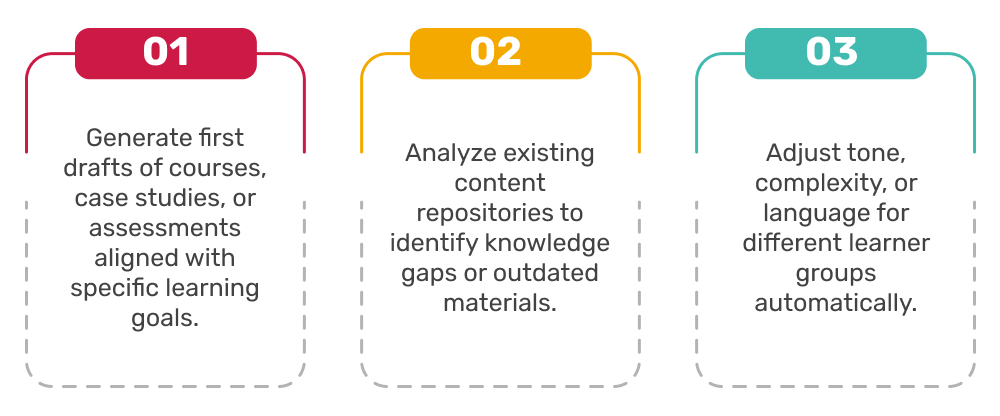
This saves valuable time and allows learning professionals to focus on creative design, contextual storytelling, and alignment with business needs.
However, while AI can accelerate production, humans give content meaning. L&D professionals bring cultural awareness, empathy, and strategic judgment. They ensure the content reflects organizational values, drives desired behavior, and connects emotionally with learners.
In this layer, AI provides efficiency, while humans provide authenticity. The balance ensures learning assets are both scalable and purposeful.
Layer 2: AI-Enhanced Delivery
Even the best learning content has little impact if not delivered effectively. Today’s employees expect learning that fits naturally into their workday and is short, relevant, and personalized.
AI enhances delivery by making learning experiences adaptive and contextual. It enables systems to:
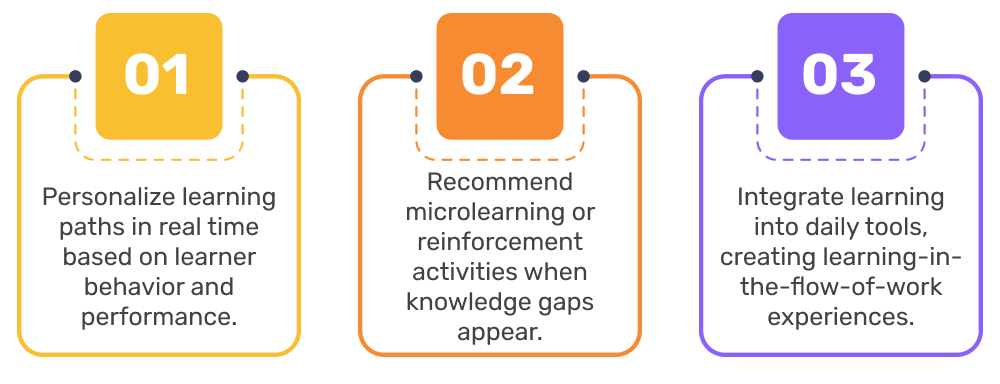
This creates an environment where learning happens continuously instead of occasionally. Employees receive what they need, when they need it, without having to search or wait for scheduled sessions.
Still, human guidance remains essential. L&D professionals interpret learner data, set priorities, and ensure inclusivity. They know when a person needs encouragement or coaching rather than another digital recommendation.
In this layer, AI delivers precision, and humans deliver connection. The result is a learning experience that feels personal, relevant, and genuinely supportive.
Layer 3: AI-Driven Intelligence
The third layer focuses on insight. For years, L&D leaders have struggled to demonstrate the real impact of learning. AI is helping close that gap through data-driven intelligence that connects learning to performance.
AI-driven intelligence allows organizations to:
- Track which learning programs create measurable behavioral or performance outcomes.
- Detect emerging skill gaps and recommend targeted upskilling.
- Predict future learning needs by analyzing engagement patterns and performance data.
Here is how the relationship between AI and humans evolves across all three layers:
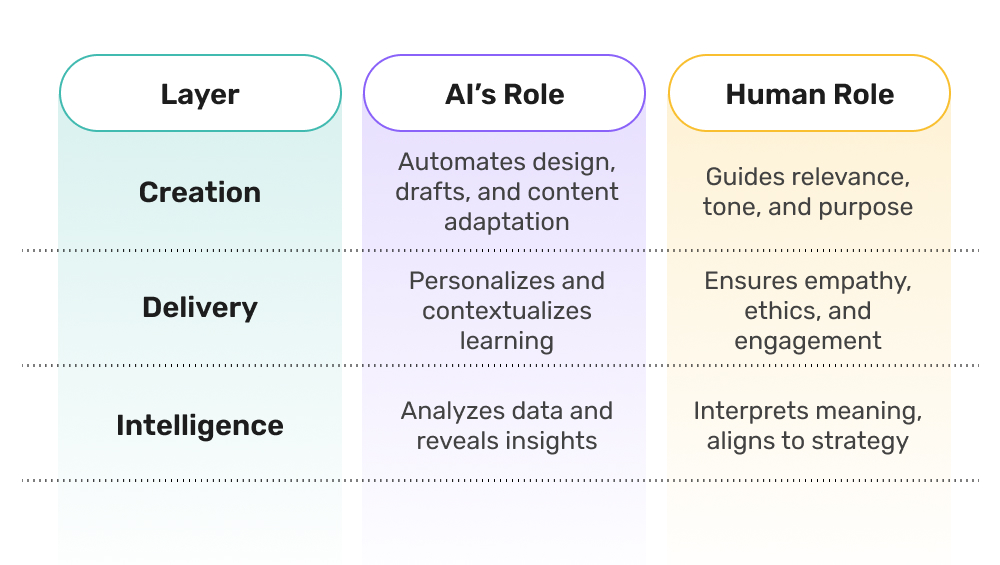
While AI uncovers patterns, humans interpret them. Data alone cannot explain culture, motivation, or potential. L&D professionals turn insights into strategic action, linking learning to business priorities and long-term talent growth.
Bringing the Layers Together
These three layers work best when they operate as a connected system. Insights from the intelligence layer feed into content creation. Engagement data from delivery improves design decisions. Each part strengthens the next.
This creates a continuous feedback loop where the learning ecosystem adapts as the organization evolves. It becomes self-improving, driven by data, guided by human expertise.
For L&D professionals, this integration marks a shift in identity. They move from managing courses to architecting learning ecosystems, from reporting outcomes to driving performance strategy. The work becomes more consultative, analytical, and impactful.
The Human Role in an AI-Integrated Future
As AI grows more capable, the temptation to automate everything will increase. But sustainable learning transformation depends on discernment, on knowing when technology should take the lead and when human judgment must guide the way.
AI can analyze and predict, but it cannot understand context or intention clearly. It can simulate empathy, but it cannot feel it. That is why L&D professionals remain the ethical and emotional core of the learning process.
Their strength lies in:
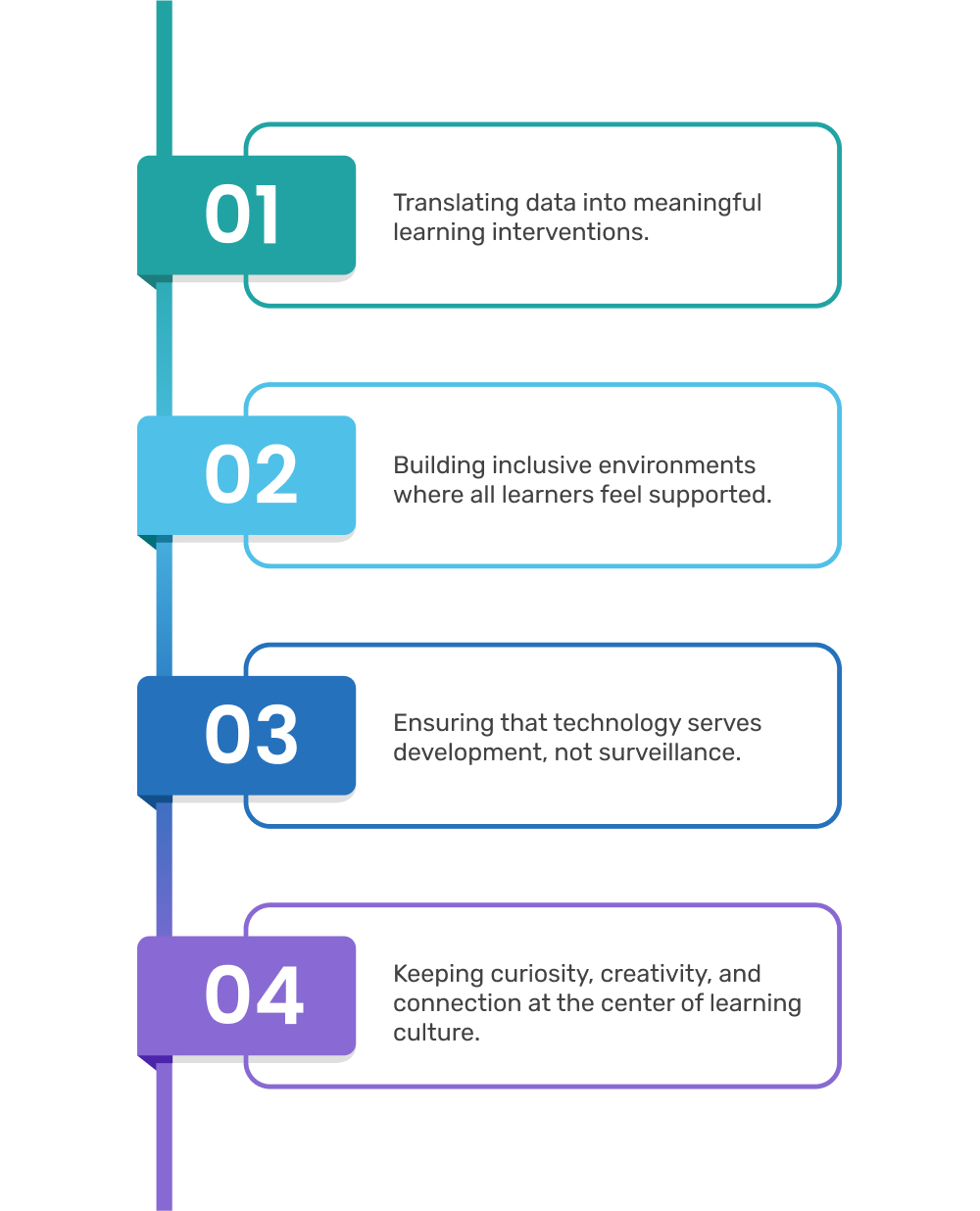
The goal is not to teach humans to think like machines but to empower machines to serve human growth more effectively.
Putting Learning Into Practice with KnowledgeCity, the Best Employee Training Platform
Learning works best when insight and human judgment guide every step. KnowledgeCity helps organizations put learning into practice by building skills, reinforcing knowledge, and preparing teams to tackle real challenges with confidence.