
HR and L&D professionals know that formal training represents only a small part of how employees build skills. Most learning occurs while solving problems, observing others, and collaborating in daily work. The 70-20-10 model reflects this reality and provides a clear framework for shaping learning experiences.
AI adds clarity and support to this framework. It allows L&D teams to see learning in real time, identify opportunities for skill growth, and connect development efforts to actual workplace performance. AI supports learning without replacing the human element.
In this blog, we will explore how AI strengthens each dimension of the 70-20-10 model, provide practical approaches for L&D teams, and share guidance for applying AI responsibly to enhance workplace learning.
Revisiting the 70-20-10 Framework
To apply AI effectively, it helps to first revisit the framework. The model outlines three key ways people learn:
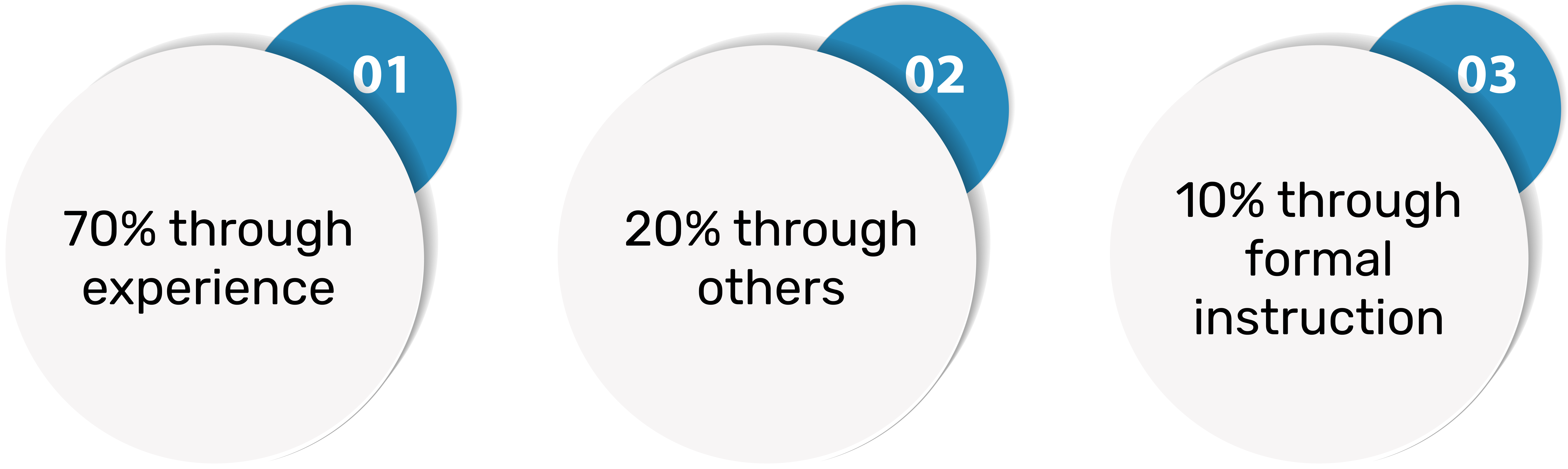
Each part is important, but the greatest impact comes when the three are connected. Many organizations focus heavily on formal, static training programs, but most learning happens during work. AI allows L&D teams to recognize, guide, and reinforce these everyday moments, turning them into structured development opportunities.
Applying AI to Experiential Learning (70%)
Work itself is the primary trainer. Employees develop skills as they solve problems, handle new responsibilities, or navigate unfamiliar tasks. For L&D teams, the challenge is understanding what employees are learning and how to support that growth.
AI can help by spotting patterns in performance and workflows. It can show which tasks lead to meaningful skill development and where extra guidance might be needed. For instance, AI can highlight repeated errors in project reports or task completion, helping managers suggest targeted learning resources at the right moment.
Simulated learning environments powered by AI give employees the chance to practice complex tasks in realistic conditions. These simulations improve confidence, strengthen decision-making, and allow employees to experiment safely before applying skills in real situations.
Reflection is also important. AI-driven tools, such as automated feedback summaries or digital journals, prompt employees to consider what they are learning and track their progress. For L&D leaders, these insights reveal how everyday work translates into skill growth.
Supporting Learning from Others (20%)
Employees also learn through collaboration, feedback, and observing how others work. AI can strengthen these interactions while keeping the human connection at the center.
AI systems can match employees with mentors or collaborators based on shared goals, skills, or experiences. They can also identify where knowledge is spreading effectively and where stronger relationships could improve learning.
Across teams and departments, AI can analyze communication patterns or community activity to highlight active learning networks and emerging topics. It can summarize discussions, surface useful insights, and recommend resources that help maintain the flow of knowledge.
By making social learning visible and easier to manage, AI helps L&D leaders support collaboration, reinforce knowledge sharing, and strengthen informal learning alongside formal programs.
Personalizing Formal Learning (10%)
Formal learning is still important for structured knowledge, compliance, and leadership development. AI makes formal learning more relevant by adapting it to individual needs.
AI-powered learning platforms adjust course sequences and difficulty based on each employee’s progress. Automated assessments provide timely feedback, helping employees apply what they learn immediately.
For L&D teams, AI also shows which methods work best for different roles or skill levels. Rather than tracking completion alone, leaders can see how formal learning influences skills, confidence, and job performance.
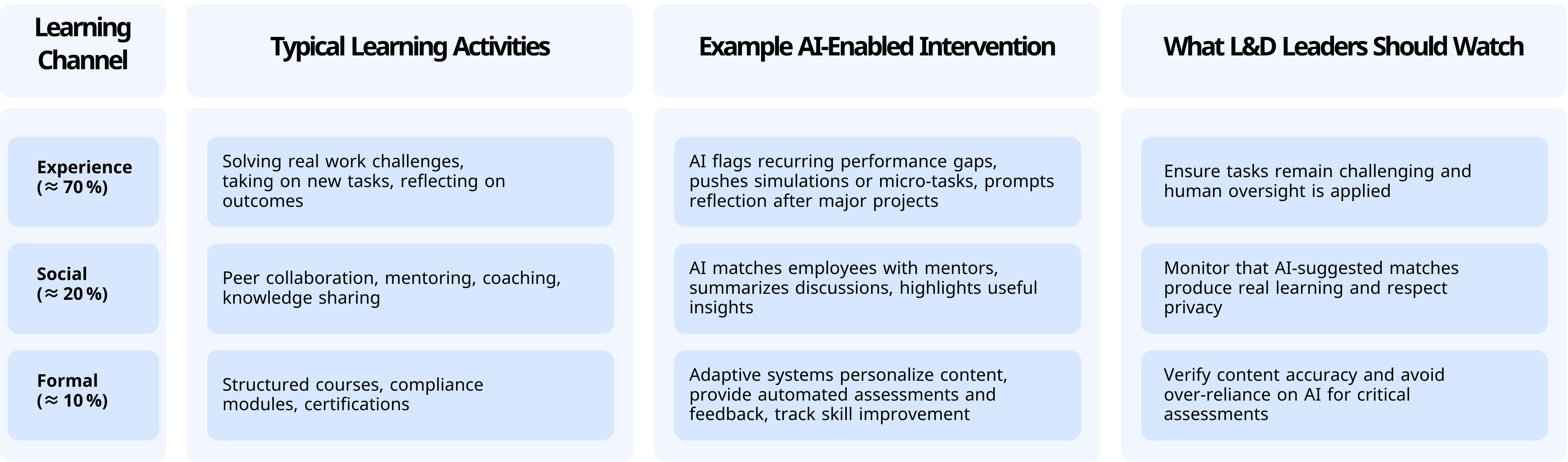
AI‑Enabled Interventions Across The 70‑20-10 Model
To see these applications more clearly, the table below summarizes how AI supports each learning type and what L&D leaders should monitor:
Connecting All Three Dimensions of Learning
When AI integrates experiential, social, and formal learning, it creates continuous development. Data from day-to-day work can inform training priorities, while insights from collaboration reveal gaps that formal courses can address.
This unified view helps L&D teams identify patterns, reduce overlap, and guide employees toward the most valuable growth opportunities. Learning becomes part of the workflow rather than an isolated activity.
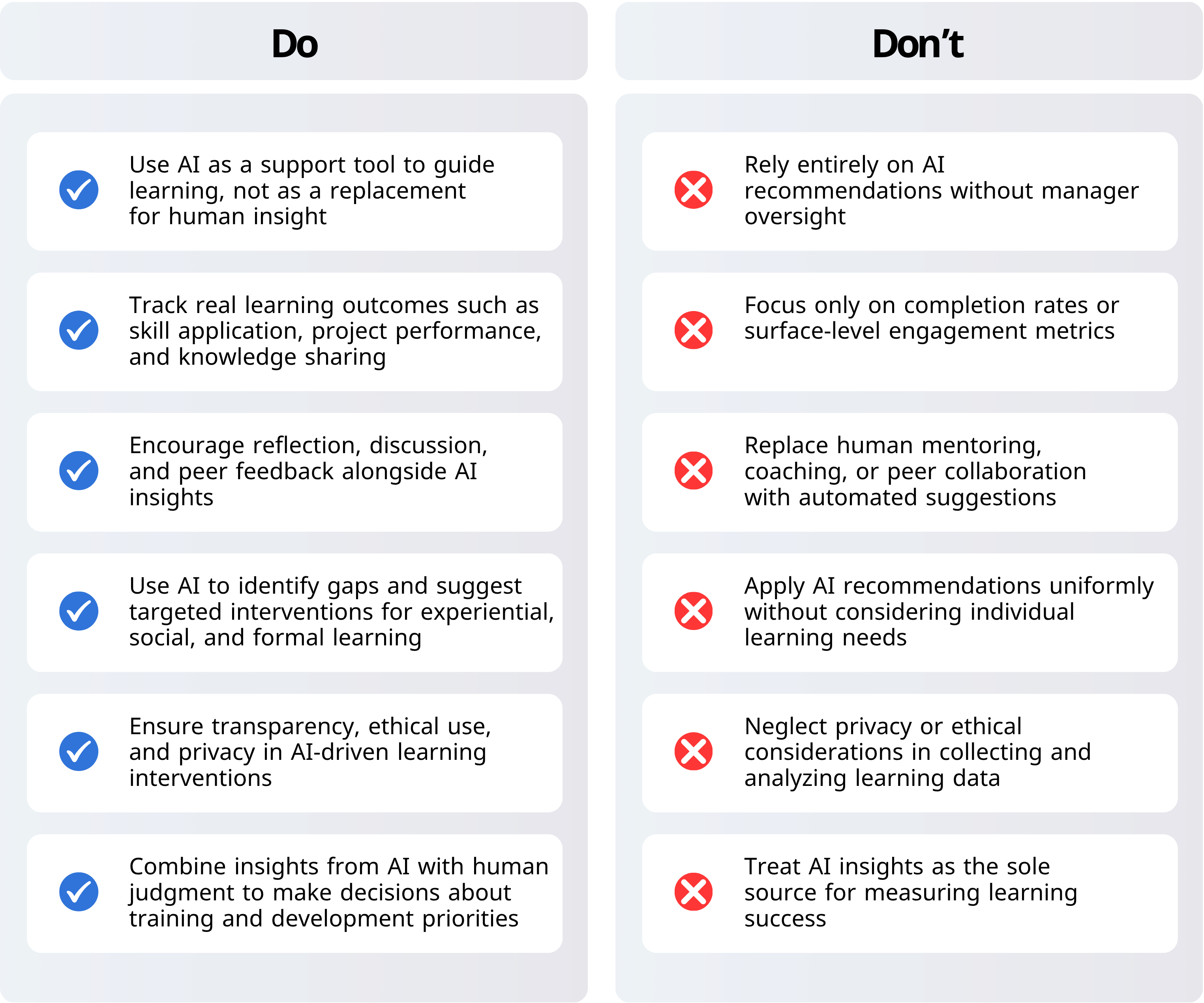
Do’s and Don’ts for Using AI in the 70-20-10 Model
Keeping People at the Center
AI enhances learning, but it does not replace human purpose. Value comes from curiosity, shared insight, and meaningful reflection.
For HR and L&D leaders, AI should be a guide that makes learning more visible and relevant. When applied thoughtfully, AI strengthens the principles that make the 70-20-10 model effective: hands-on experience, human connection, and structured growth that builds lasting capability.
KnowledgeCity is recognized as one of the best employee training platforms in the USA, helping organizations deliver effective, continuous learning through its advanced LMS and extensive course library. With thousands of expert-led courses across business, compliance, and safety, KnowledgeCity enables leaders to support ongoing development, close skill gaps, and improve workforce performance with clarity and confidence.